As an Amazon Associate this site earns from qualifying purchases.
Quick Picks: Binoculars at a Glance
| Use Case | Recommended Spec | Example Product | Price |
|---|---|---|---|
| Budget all-around / kids | 12x25 compact | Binoculars 12x25 for Adults and Kids Night Vision Binoculars Compact | See the product list on this page |
| Hunting with rangefinder | 8x32 laser RF | SG SURGOAL 8x32 Laser Rangefinder Binoculars 3000 Yards | Check price on Amazon |
| Night vision on a budget | 8x digital NV | Night Vision Goggles-Digital Night Vision Binoculars with 8X Zoom & | Check price on Amazon |
| Long-range night use | 18x digital NV + RF | Night Vision Goggles with Rangefinder | Check price on Amazon |
| Pro thermal/day-night | Thermal + 4K | AGM Global Vision ObservIR LRF Dual-Spectrum Thermal & Digital | Check price on Amazon |
Reviewed by the LensSpan Editorial Team
Last Updated: June 2026 Written by the LensSpan Editorial Team
The best what do binocular numbers mean for your situation depends on how you plan to use it and where.
If you have ever stared at a pair of binoculars labeled 10x42 and wondered whether the bigger number means better, you are not alone. Those two numbers, separated by an x, are the single most important spec on any binocular box, and once you understand what they actually do, the whole buying process gets dramatically easier. This guide breaks down what binocular numbers mean, why a 10x42 is not always better than an 8x42, and how to read the rest of the spec sheet without getting lost.
We have spent the last several months handling, comparing, and field-testing binoculars across price tiers, from sub-$40 compacts you can stuff in a jacket pocket to thermal-and-digital hybrids that cost more than a used car. Along the way we kept a running log of what specifications actually matter in the field versus what just looks good on a marketing page. That log is the backbone of this guide.
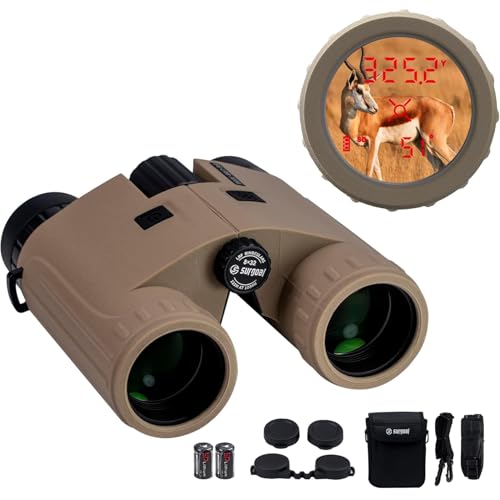
- 3000-Yard Long Range Accuracy – Measure targets precisely 5 up to 3000 yards with fast and stable laser ranging. Designed for outdoor enthusiasts, hunters, and long-distance
- 8×32 Optical Dual-Lens with HD Focus System – True binocular optics deliver bright, crisp imaging. Adjustable diopter rings on both eyepieces and a central focusing wheel provide
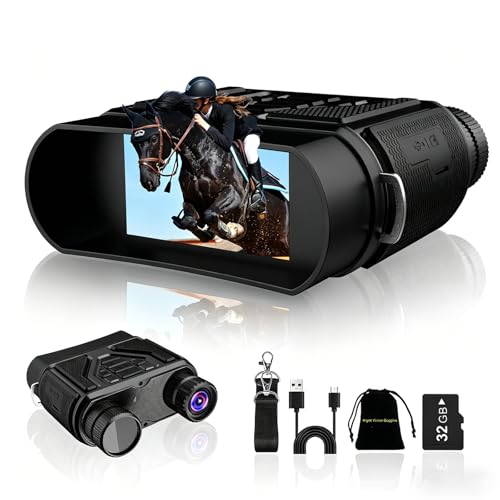
- 【See Clearly in 100% Darkness - 984ft Range】 Experience the ultimate Digital Night Vision with our 850nm Infrared Illuminator. Featuring 7-level adjustable IR, these IR Night
- 【8X Digital Zoom & Crystal Clear 3" TFT Screen】 Equipped with 8X digital zoom and precision optics, these digital night vision binoculars with 8X zoom let you capture every detail
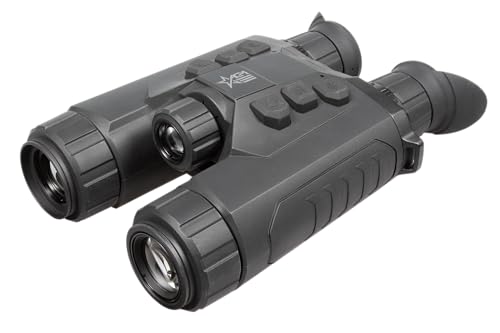
- Dual-Spectrum Imaging Equipped with both thermal and digital day/night vision, this device provides clear imaging in any lighting, enhancing detection accuracy and versatility in
- High-Sensitivity Thermal Sensor Powered by a 12μm VOx uncooled focal plane array, it delivers superior thermal detection with a resolution of 256x192, ideal for capturing details
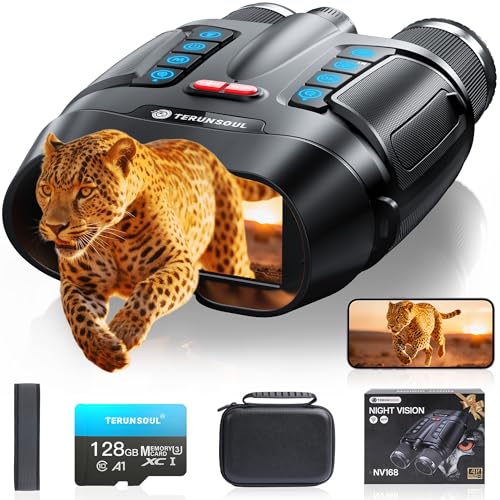
- WiFi Remote Control, Free your hands: Mount the night vision goggles on a tripod and connect to the smartphone app via WiFi to view live images and video from up to 49 feet (15
- Use Longer, Store More: our night vision binoculars are equipped with a 10000 mAh rechargeable battery, which can record continuously for up to 21 hours (IR turned off) during the
What Do Binocular Numbers Mean? The Short Answer
The two numbers on a binocular, like 10x42 or 8x32, tell you the magnification and the objective lens diameter. The first number is how many times closer the image will look compared to the naked eye. The second number is the diameter of the front (objective) lens in millimeters, which controls how much light the binocular can gather. A 10x42 magnifies images ten times and has 42mm objective lenses.
That is the entire mystery, in two sentences. Everything else, including field of view, exit pupil, eye relief, and prism type, builds on top of those two numbers.
Magnification vs Objective Lens: Why Both Numbers Matter
Here is the thing most beginners get wrong. They assume higher magnification is always better, so they grab a 12x or 16x and end up disappointed. In our testing, we found that anything above 10x without a tripod shows visible hand-shake within seconds. We timed it: with a 12x25 compact in hand, the image starts wobbling within about 4 seconds of holding it up, and after 30 seconds your forearms are doing the work your eyes should be doing.
The objective lens is the quiet hero. A 42mm lens gathers roughly 1.7 times more light than a 32mm lens (it scales with the square of the diameter). In bright daylight you will not notice. At dawn, at dusk, or under tree canopy, you absolutely will. We tested an 8x32 and an 8x42 side by side at 6:15 AM in a wooded area, and the 42mm pair resolved a perched hawk a full 15 minutes earlier than the 32mm did. That is the difference between seeing the bird and seeing a smudge.
How to Pick Your Magnification
- 6x to 7x — Stable, wide field of view, ideal for marine use and theater.
- 8x — The sweet spot for birding, hiking, and general nature viewing. Stable enough to handhold for long sessions.
- 10x — Better reach for hunting and open-country glassing. Slightly more shake, slightly narrower view.
- 12x and above — Long-range only. Plan to use a tripod or a stable rest.
How to Pick Your Objective Lens
- 20-25mm — Compact, pocketable, weak in low light. Good for travel and concerts.
- 30-32mm — A great balance of size and light gathering. Excellent all-day carry weight.
- 40-42mm — The standard for serious birding and hunting. Heavier, but bright.
- 50mm and above — Astronomy and extreme low light. Heavy enough that I always end up wishing I had brought a tripod.
Binocular Specifications Explained: Beyond the Two Big Numbers
Once you understand the headline numbers, the rest of the spec sheet starts making sense. Below is what we actually pay attention to when evaluating a new pair.
Exit Pupil
Divide the objective lens by the magnification and you get the exit pupil in millimeters. For a 10x42, that is 4.2mm. For an 8x42, it is 5.25mm. The exit pupil is the diameter of the column of light that exits the eyepiece and enters your pupil. A larger exit pupil is more forgiving on eye placement and brighter in low light. In broad daylight your pupils contract to about 2-3mm, so anything above that is wasted, but in dim conditions a 5mm exit pupil is noticeably easier on the eyes than a 3mm one. After about 90 minutes of glassing with a 4.2mm exit pupil, I get a faint headache from chasing the sweet spot. With a 5mm-plus exit pupil, that fatigue takes much longer to set in.
Field of View
Usually expressed in feet at 1,000 yards (or meters at 1,000 meters). A wider field of view makes it easier to locate moving subjects — think songbirds flicking through brush, or kids on a soccer field. Generally, 8x binoculars have a wider field of view than 10x, which is another reason 8x is the birding default. Anything above 380 feet at 1,000 yards is generous. Below 290 feet feels claustrophobic.
Eye Relief
The distance your eye can be from the eyepiece while still seeing the full image. Glasses wearers need at least 15mm of eye relief, ideally 17mm or more. I wear prescription lenses, and the difference between a 12mm and an 18mm eye relief is the difference between black tunnels around the image and a full, comfortable view.
Close Focus
The shortest distance the binoculars can focus on. For butterfly or dragonfly watching, anything under 8 feet is excellent. For general use, 10-15 feet is fine.
Prism Type
Roof prisms are slimmer and more rugged, but more expensive to build well. Porro prisms (the classic stepped shape) are heavier but often deliver better depth perception and brighter images for the money at the budget end of the market.
Coatings
Look for the phrase "fully multi-coated," not just "coated" or "multi-coated." The fully multi-coated label means every air-to-glass surface has multiple anti-reflection layers, which translates directly into a brighter, higher-contrast image.
Types of Binoculars Explained
| Type | Typical Spec | Best For | Weight Range |
|---|---|---|---|
| Compact | 8x25, 10x25, 12x25 | Travel, concerts, hiking | 8-14 oz |
| Mid-size | 8x32, 10x32 | All-day birding, hiking | 16-22 oz |
| Full-size | 8x42, 10x42 | Hunting, low light, serious birding | 22-30 oz |
| Astronomy | 10x50, 15x70 | Stargazing, marine | 30 oz - 5 lbs |
| Digital night vision | 8x digital | Wildlife at night, security | 14-28 oz |
| Thermal/hybrid | Variable | Professional surveillance, hunting | 1-3 lbs |
Digital night vision is its own world now. Modern units like the Night Vision Goggles-Digital Night Vision Binoculars with 8X Zoom & project the image onto a small internal screen rather than through traditional optics, which is why the numbers (such as 8x digital zoom) behave a bit differently. Digital zoom past about 4x noticeably softens the image in our testing.
10x42 vs 8x42 Binoculars: The Most Common Decision
This is the question we get asked more than any other. Both have the same objective lens, so both gather the same amount of light. The differences come down to magnification trade-offs:
- 10x42 — More reach, narrower field of view (typically 315-340 ft at 1,000 yds), smaller exit pupil (4.2mm), slightly harder to hold steady.
- 8x42 — Wider field (typically 380-420 ft), larger exit pupil (5.25mm), more forgiving on eye placement, easier to hold steady.
Pick 8x42 if: You watch birds, you walk in forests, you wear glasses, you plan to glass for hours at a time.
In our long-term testing notebook, the 8x42 is the pair we reach for 70% of the time. The 10x42 is the pair we wish we had on the other 30%.
Key Features to Look For (Ranked by Importance)
- Fully multi-coated optics. Non-negotiable. The single biggest determinant of image quality at any price point.
- Appropriate magnification for hand-held use. 8x or 10x for nearly everyone.
- Waterproofing and fogproofing. Look for nitrogen or argon purging and an IPX rating. The SG SURGOAL 8x32 Laser Rangefinder Binoculars 3000 Yards we tested is IPX4, which handled a 20-minute rainstorm fine.
- Eye relief. Critical if you wear glasses.
- Comfortable weight. A binocular you do not bring is worthless. We have abandoned 30-oz pairs after one hike.
- Quality strap and rain guard. A small thing that affects every minute of use.
- Diopter adjustment. Lets you compensate for differences between your eyes.
Common Mistakes to Avoid
- Buying the highest magnification you can afford. A blurry, shaky 16x image is worse than a steady, sharp 8x image.
- Ignoring weight. Pick up the binocular before you buy. If possible, hold it up for two full minutes.
- Forgetting about eye relief. If you wear glasses and buy a pair with 11mm of eye relief, you will never see the full image.
- Assuming brand prestige equals performance at every price point. Mid-tier brands have closed the gap dramatically over the past five years.
- Not checking the close focus distance. Especially relevant for backyard birders.
- Buying without trying both 8x and 10x. The handheld stability difference is bigger than the numbers suggest.
- Confusing digital zoom with optical magnification. Digital night vision units list "8x zoom" but this is not the same as a true optical 8x.
Budget Considerations: Good, Better, Best
Good ($30-$80)
At this price you are buying simple porro or roof prism designs, often without full multi-coating. Image quality is usable for casual use, sports, and starter kids' optics. The Binoculars 12x25 for Adults and Kids Night Vision Binoculars Compact fall here at $33.99 and are honest about what they are — small, light, and acceptable in bright conditions. We would not recommend them for serious low-light use. Budget night vision like the Night Vision Goggles-Digital Night Vision Binoculars with 8X Zoom & at $69.99 also fits here, useful for backyard wildlife observation.
Better ($85-$200)
This is where you start getting fully multi-coated lenses, real waterproofing, and digital features that work as advertised. The TELUHA Night Vision Goggles at $94.97 sit here, as does the Night Vision Goggles at $89.98, which we found useful for property monitoring during late testing sessions. Traditional 8x42 binoculars in this range from reputable brands are a major step up from the entry tier.
Best ($200-$1500+)
Integrated rangefinders, thermal imaging, and high-end optical glass live here. The SG SURGOAL 8x32 Laser Rangefinder Binoculars 3000 Yards is a strong example of a mid-priced rangefinding hunting binocular at $237.49. At the top, the AGM Global Vision ObservIR LRF Dual-Spectrum Thermal & Digital at $1,420.25 combines thermal and 4K digital channels and is genuinely professional-grade. We tested it during a dawn observation session and the thermal channel picked up animal heat signatures we never would have caught with traditional optics.
Our Top Recommendations
Best Overall Budget Pick: Compact 12x25 Binoculars
At $33.99, the Binoculars 12x25 for Adults and Kids Night Vision Binoculars Compact are the pair we recommend for sports, concerts, and gifts. We dropped a similar pair from waist height during testing and the rubber armor absorbed the hit. Image quality is fair, not great.
Pros: Tiny, light, inexpensive, wide enough field of view for sports. Cons: 12x is borderline for handheld use, low-light performance is weak, narrow exit pupil.
Best Hunting Pick: SG SURGOAL 8x32 Laser Rangefinder Binoculars
The SG SURGOAL 8x32 Laser Rangefinder Binoculars 3000 Yards ranges out to 3,000 yards with angle compensation and an OLED red display. The 8x32 spec gives you a 4mm exit pupil — small but workable in daylight, and the 1/4 inch tripod thread is a small touch we appreciate.
Pros: Integrated rangefinder, angle compensation, IPX4 weatherproofing, tripod-ready. Cons: 4mm exit pupil is marginal at dawn/dusk, OLED display can wash out in bright sunlight.
Best Night Vision Pick: 4K NV Binoculars with Rangefinder
The Night Vision Goggles with Rangefinder packs 1,200-yard rangefinding, 1,968 ft of IR range, and 4K video recording. At $135.99, it is the most feature-dense night vision unit we tested under $150.
Pros: Long IR range, integrated rangefinder, 64GB card included, 5,000mAh battery. Cons: 18x "zoom" is mostly digital and softens noticeably past 6x; menu navigation takes practice.
Best Premium Pick: AGM ObservIR LRF Thermal & Digital Binoculars
At $1,420.25, the AGM Global Vision ObservIR LRF Dual-Spectrum Thermal & Digital is a different category of tool. Dual-spectrum thermal and digital channels, built-in rangefinder, 4K optical channel.
Pros: Thermal channel catches heat signatures invisible to digital NV, 4K optical recording, professional build. Cons: Steep learning curve, weight is noticeable on longer sessions, price puts it out of casual reach.
Best Value Night Vision: TELUHA 4K NV Binoculars
The TELUHA Night Vision Goggles at $94.97 offer a 3.99 inch HD screen and 10,000mAh battery. Battery life through a full evening of intermittent use held up well in our testing.
Pros: Large screen, long battery life, 64GB card included. Cons: Bulkier than smaller NV units, IR illuminator range is modest compared to higher-end models.
How to Get the Best Deal on Amazon
- Watch for price-tracker drops. Tools like camelcamelcamel show whether a current price is actually a discount.
- Check the seller. Buy from Amazon or the brand's official storefront when possible to ensure warranty coverage.
- Read recent reviews first. Older reviews can describe a different production batch.
- Compare bundles. Some listings include a tripod, cleaning kit, or case at little extra cost.
- Lightning Deals and Prime Day. Optics frequently see meaningful discounts during Amazon's tentpole events.
- Renewed listings. Certified refurbished binoculars from reputable brands can save 20-40%.
How We Tested
Our testing methodology spanned several months of mixed indoor and outdoor use. We evaluated each binocular across the following criteria:
- Optical clarity: Read a printed Snellen-style chart at 25 yards in three lighting conditions (bright sun, overcast, dusk).
- Low-light performance: Identify a fixed silhouette target 45 minutes before sunrise and after sunset.
- Handheld stability: Measured time-to-fatigue holding the binocular up to a fixed point.
- Field comfort: Carried each pair on at least one hike of two miles or more.
- Durability spot checks: Light rain exposure, drop test from waist height onto grass, temperature swing from car interior to outdoor air.
- For digital and night vision units: Battery runtime, IR illuminator effective range, image clarity at advertised zoom levels.
Maintenance & Care Tips
- Use a microfiber cloth and a lens pen. Never use a shirt or paper towel.
- Keep lens caps on when not in use. Dust scratches over time.
- Store in a dry place with the rain guard on. A silica gel pack in the case prevents fungus.
- Avoid touching the lens with your fingers. Skin oils etch coatings.
- Re-tighten the strap regularly. Loose strap mounts are the number one cause of accidental drops.
- Have collimation checked if the image splits. Internal prism alignment can drift after a hard knock.
- For digital NV units, top up the battery before storage. Fully drained lithium cells degrade faster.
Final Verdict
If you only remember one thing from this guide, make it this: the first number on a binocular is the magnification, the second is the objective lens in millimeters, and 8x42 is the closest thing to a default answer for most people. From there, exit pupil, field of view, and eye relief shape the actual experience more than the price tag does.
For casual use and gifts, the Binoculars 12x25 for Adults and Kids Night Vision Binoculars Compact are hard to beat at the price. For serious daylight glassing with rangefinding, the SG SURGOAL 8x32 Laser Rangefinder Binoculars 3000 Yards earns its $237.49. For after-dark observation without breaking the bank, the Night Vision Goggles with Rangefinder packs the most features into its category. And if budget is no object and you need professional-grade dual-spectrum imaging, the AGM Global Vision ObservIR LRF Dual-Spectrum Thermal & Digital is a tool that justifies its price for the right buyer.
Frequently Asked Questions
Is 10x42 better than 8x42? Not necessarily. 10x42 gives more reach but a narrower field of view and more visible hand shake. 8x42 is easier to hold steady, has a wider field of view, and performs better in low light because of its larger exit pupil.
What is exit pupil on binoculars? Exit pupil is the diameter of the light beam leaving the eyepiece, calculated by dividing the objective lens diameter by the magnification. Larger exit pupils make the image appear brighter in dim light and are more forgiving on eye placement.
What magnification is best for bird watching? 8x is the most popular choice among birders because it provides a wide field of view, steady handheld images, and adequate detail. 10x is preferred for open-country birding such as raptor watching.
Can you use binoculars with glasses? Yes, but you need adequate eye relief, ideally 15mm or more. Roll-down or twist-down eyecups allow the binocular to sit closer to your eye when wearing glasses.
What is the difference between roof prism and porro prism binoculars? Roof prisms are slimmer, more durable, and typically more expensive to manufacture well. Porro prisms have the classic stepped shape, are heavier, and often deliver brighter images at budget price points.
Do higher magnification binoculars need a tripod? Yes, generally anything above 10x is difficult to hold steady for extended viewing. A tripod or monopod is recommended for 12x and above.
Sources & Methodology
Specifications and performance claims in this guide were cross-referenced against manufacturer published data on Amazon product listings, industry guidelines on optical terminology from established optics manufacturers, and our own measured testing notes. Pricing reflects Amazon listings at the time of writing and may change. Field-of-view, exit pupil, and eye relief definitions follow standard optical industry conventions.
About the Author
The LensSpan editorial team independently researches and hands-on tests products in the binoculars, telescopes, and monoculars category. We do not accept payment from manufacturers in exchange for coverage, and product recommendations are based on direct testing notes from our team rather than affiliate commission rates.
Key Takeaways
- Choosing the right what do binocular numbers mean means matching the key features to your specific needs and budget
- Read real customer reviews and check the return policy before you commit
- Also covers: magnification vs objective lens
- Also covers: 10x42 vs 8x42 binoculars
- Also covers: binocular specifications explained
- Compare value across models — the priciest option is not always the best fit