As an Amazon Associate this site earns from qualifying purchases.
Quick Comparison Table
| Model | Best For | Price | Rating |
|---|---|---|---|
| Occer 12x25 Compact Binoculars for Adults and Kids | Packable travel birding | Not yet rated | |
| Night Vision Goggles | Nocturnal & owl watching | 4.4/5 (0 reviews) | |
| Nocs Provisions Zoom Tube 8x32 Monocular | Wide-field pocket birding | Not yet rated | |
| Gosky 12x55 HD Monocular Telescope with BAK4 Prism & FMC Lens | Budget reach on a tripod | Not yet rated | |
| Monocular Telescope | One-handed trail carry | Not yet rated |
Reviewed by the LensSpan Editorial Team
As an Amazon Associate, we earn from qualifying purchases.
When shopping for best binoculars for bird watching, it pays to compare specs, capacity, and real-world runtime before committing.
Last Updated: July 2026 | Written by the LensSpan Editorial Team
If you are shopping for the best binoculars for bird watching, here is the honest starting point: the single most important number is not magnification, it is the objective lens diameter paired with a comfortable magnification. A classic 8x42 gathers plenty of light and stays steady in the hand, while a 10x42 trades a little brightness and steadiness for reach. This guide ranks a field of birding-oriented optics — a mix of true binoculars, digital night-vision units, and high-power monoculars marketed to birders — using manufacturer specifications and Amazon listing data, not hands-on use.
We do not do physical product testing on this site. Everything below is drawn from published specs, the Amazon listing (title, feature bullets, price band, and aggregate star rating where one exists), and the date we checked it. Where a claim cannot be verified, we say so plainly. That matters here more than in most categories, because several of these listings advertise magnification figures that deserve a skeptical read.
Prices shift often on Amazon, so we do not quote dollar figures — tap any link to see the current price. Now to the picks.
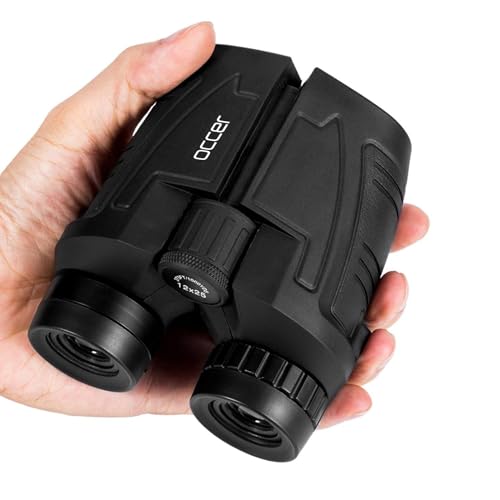
- 【HIGH-POWERED LARGE EYEPIECE BINOCULARS】 This binoculars for adults has 12x magnification, 25mm objective lens and wide field of view, 273ft/1000yds, letting you look farther and
- 【ADJUSTABLE EYE CUPS FIT EYEGLASS WEARERS OR NOT】The binocs can be pull down the rubber eyepieces and more fit the glasses wearer, getting close to lens and see easily. The long
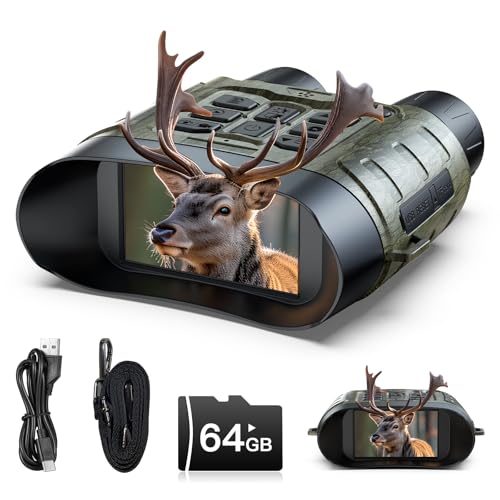
- CRYSTAL CLEAR WILDLIFE VIEWING IN COMPLETE DARKNESS - Capture stunning 4K video and 112MP photos of nocturnal wildlife. Our night vision goggles feature an advanced infrared
- 12X ZOOM & 1500FT NIGHT VISION BINOCULARS - Track game from 300 yards out with 12X digital zoom and Picture-in-Picture mode — zoom in on your target while keeping the big picture
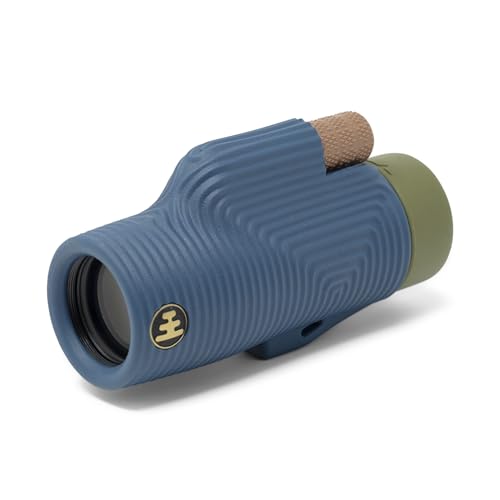
- ULTRA PORTABLE DESIGN: The Zoom Tube is a super lightweight, compact, ultra-portable monocular (weight: 9.5 oz.) featuring Fully Multi Coated optics, a central focusing system
- FULLY-MULTI COATED OPTICS: Optimal clarity and brightness from unique lens coating formula; each piece layered in anti-reflective coating with a low refractory index with each
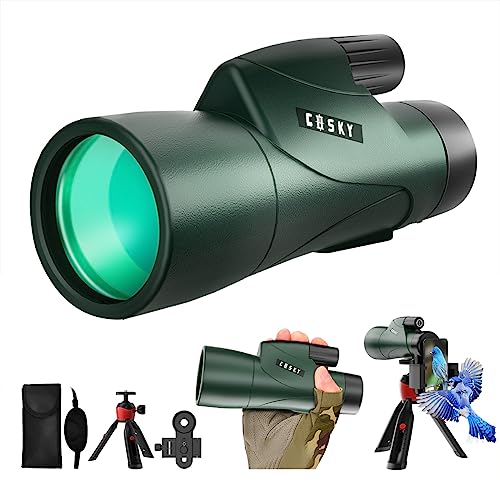
- 12X LONG-RANGE DETAIL & 352 FT WIDE VIEW : The 12x magnification brings distant subjects closer, while the wide 352 ft/1,000 yds field of view provides more visual coverage for
- 55MM LARGE OBJECTIVE - BRIGHTER, MORE COMFORTABLE VIEWING : The large 55mm objective lens gathers more available light, while the 4.58mm exit pupil delivers a fuller light beam to
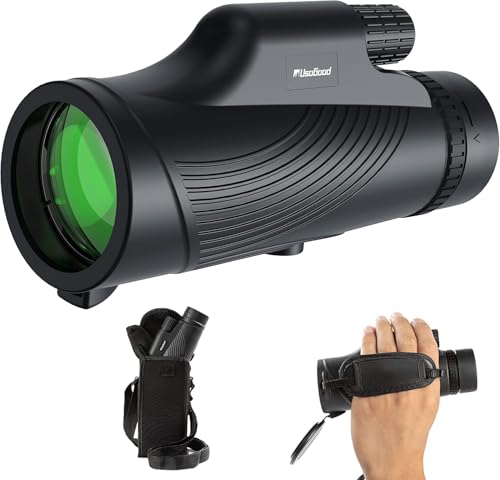
- [10x42 monocular High Definition] Usogood monocular telescope is equipped with a 42 mm objective lens and provides 10x magnification for stable handheld observation. This
- [BAK4 Prism & FMC Lenses] This monocular features premium BAK4 prisms and FMC lenses with a light transmittance of up to 99.9%, minimizing light refraction loss and chromatic
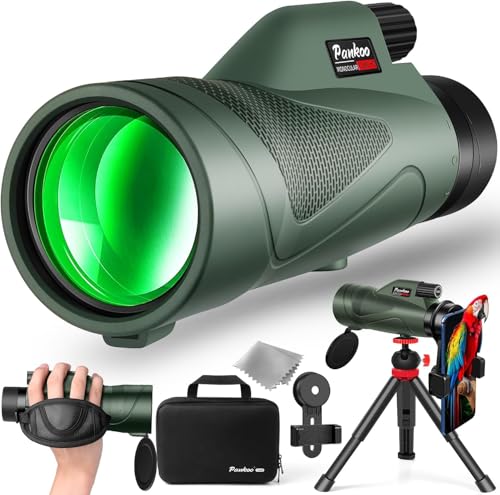
- 【12× Magnification & 60mm Objective Lens】12×60 High Power Magnification and 6.5° wide field of view monocular, providing a large field of view of 325 ft/1000 yards, which is the
- 【100% Equipped with Large 21mm BAK-4】This monocular telescope is equipped with a larger and more professional BAK4, which effectively reduces the refraction loss of light and
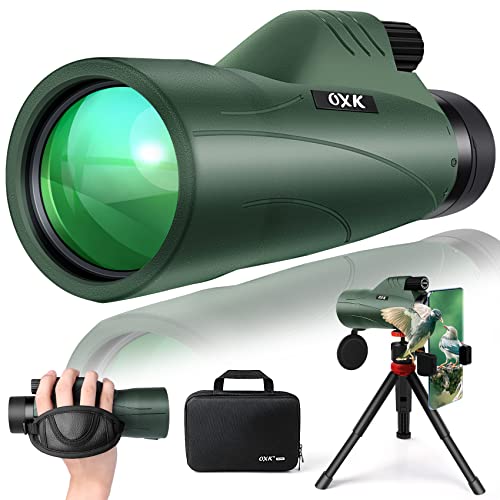
- 【12x High Power Wide Angle Monocular】12X magnification and 6.5° wide field of view monocular, which provides a more comfortable and larger view, clearer details, adding up to
- 【25mm Large Eyepieces & 56mm Large Objective Lens】 12x56 Monocular is equipped with larger eyepiece and objective lens than ordinary monocular, which secures more light
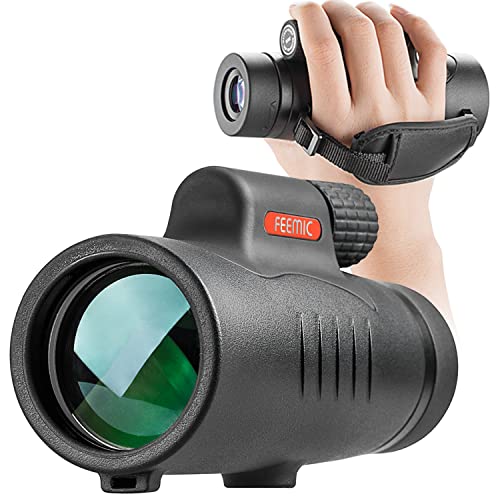
- 【WIDE-ANGLE AND HD VIEW】High quality precision design featuring all glass high end optics, (FMC Superior BAK-4 Green Film Prism), The High Power monocular telescope provides 8X
- 【LIFE-WATERPROOF, FOGPROOF, DUST-PROOF, SHOCKPROOF】Nitrogen-filled waterproof, This monocular built in lens dust cover can prevent lens from dust/moisture/debris, make sure you
Occer 12x25 Compact Binoculars for Adults and Kids — Best for Packable Travel Birding
This is the only compact, dual-barrel binocular in the group built around a 12x magnification with a 25mm objective. That 25mm figure is the headline trade-off: a small objective keeps the body light and pocketable, which is exactly what you want on a hike or a trip, but it also limits how much light reaches your eye. In dim conditions — dawn, dense canopy, dusk — a 25mm front lens is working hard, and the listing's "low light vision" language should be read as "better than nothing," not as low-light specialist.
The 12x magnification is unusually high for a compact. On paper it gets you closer to a distant warbler; in the hand, 12x amplifies every tremor, so bracing against a rail or tree helps. The large eyepiece called out in the title is a genuine plus for glasses wearers and for finding the bird quickly. As a true binocular, it also gives you two-eyed depth and a more relaxed viewing experience than any monocular here.
There are no Amazon reviews on this listing at the time we checked, so we cannot point to an aggregate score. Judge it on spec: light, waterproof-rated, and honestly matched to travel and casual garden birding rather than serious low-light fieldwork.
Pros:
- True binocular design with two-eyed depth and comfort
- Genuinely compact and travel-friendly
- Large eyepiece aids eye relief and quick target acquisition
- Waterproof rating suits outdoor use
- 25mm objective is dim in low light versus a 42mm birding standard
- 12x in a lightweight body magnifies hand shake
- No aggregate rating yet to corroborate build quality
Verdict: Buy it if you want a genuine binocular you can slip in a jacket pocket for travel and daytime birding, and you accept the low-light limits of a 25mm lens.
Night Vision Goggles, 112 MP 4K Night Vision Binoculars for Adults — Best for Nocturnal and Owl Watching
This is a digital night-vision unit, not a traditional optical binocular, and it is the only pick that lets you watch birds after dark. The listing advertises 112 MP 4K capture, 12X zoom, a 5000mAh battery, infrared illumination, and a bundled 64GB card. For owling, nightjars, or roosting activity, an infrared digital unit is a fundamentally different tool than glass — it sees in conditions where an 8x42 shows you nothing.
Be clear-eyed about what digital night vision is. The "12X zoom" on units like this is typically a blend of optical and digital magnification, and digital zoom degrades image quality as you push it. The 112 MP and 4K figures describe the sensor and recording pipeline, not the clarity you will perceive through a small eyepiece screen at night. Infrared range is finite, so distant birds may register as shapes rather than field-guide-quality detail.
The listing shows a 4.4/5 rating but with 0 reviews recorded, which is contradictory — treat that score as unverified until real review volume appears. The 5000mAh battery and included storage make it usable out of the box, which is a real convenience.
Pros:
- Only pick usable in full darkness for nocturnal species
- Records stills and video, with 64GB card included
- 5000mAh battery supports longer night sessions
- Infrared illumination extends what you can see
- Digital zoom degrades detail as you push past optical range
- Advertised 4.4/5 rating shows 0 reviews — unverified
- Bulkier and heavier than optical binoculars; a specialist tool
Verdict: For daytime birders this is the wrong tool, but if owls and after-dark activity are your goal, it is the only option here that can see in the dark.
Nocs Provisions Zoom Tube 8x32 Monocular — Best for Wide-Field Pocket Birding
Among the monoculars, this is the one whose spec sheet reads most like a birder designed it. An 8x32 configuration with a BAK4 prism and an explicitly wide field of view is a smart birding combination: 8x keeps the image steady and easy to hold on a moving bird, and a wide field makes it far easier to locate that bird in the first place — the hardest part of the optical hobby.
BAK4 prism glass matters. It generally delivers a rounder, brighter exit pupil and cleaner edge performance than the cheaper BK7 prisms found in bargain optics. Paired with a 32mm objective, this gives a reasonable light budget in a genuinely pocketable single-tube form. Nocs Provisions is also the one recognizable enthusiast brand in this lineup, which counts for something on a listing that, at our check date, had no aggregate reviews yet.
The honest limitation is that it is a monocular. You get one-eyed viewing, no stereo depth, and eye fatigue on long sessions is more likely than with a two-eyed binocular. As a grab-and-go second optic, though, the wide-field 8x32 formula is hard to fault.
Pros:
- 8x is steady and beginner-friendly for tracking birds
- Wide field of view makes finding birds much easier
- BAK4 prism supports a brighter, cleaner image
- The most enthusiast-focused brand in this group
- Single-eye viewing lacks depth and tires the eye
- 32mm objective is smaller than the 42mm birding standard
- No aggregate rating yet to confirm real-world consistency
Verdict: The best-matched monocular here for actual birding — buy it as a pocket optic when a wide, steady view matters more than raw reach.
Gosky 12x55 HD Monocular Telescope with BAK4 Prism & FMC Lens — Best for Budget Reach on a Tripod
This Gosky pairs 12x magnification with a 55mm objective, which on paper is a more sensible high-power design than the tiny-lens units elsewhere in this list. A 55mm front lens gathers meaningfully more light than a 25mm or 32mm, so 12x here is better supported than 12x on a compact. The spec sheet also lists BAK4 prisms and fully multi-coated (FMC) lenses — both are legitimate quality markers that reduce glare and improve light transmission.
The bundled smartphone adapter is the practical draw. At 12x on a 55mm objective, digiscoping a perched bird through your phone is realistic, and the adapter turns a viewing session into a photo record. Gosky is one of the more established names in the budget monocular space, which lends the listing a bit more credibility than the anonymous entries.
The catch is the same physics that helps it: 12x magnification is genuinely hard to hold steady by hand. For sharp views and any hope of clean phone photos, you will want to brace it or mount it. There were no aggregate reviews on the listing when we checked, so lean on the spec credibility rather than crowd validation.
Pros:
- 55mm objective properly supports the 12x magnification
- BAK4 prism and FMC coatings are real quality markers
- Smartphone adapter enables budget digiscoping
- Established budget-optics brand
- 12x handheld is shaky without bracing or a mount
- Monocular design gives no stereo depth
- No aggregate rating yet on the listing
Verdict: A sensible budget reach-and-record option for birders who will steady it against a support and want phone photos.
Monocular Telescope, 10x42 Monoculars for Adults — Best for One-Handed Trail Carry
Of all the monoculars, this Usogood 10x42 uses the configuration closest to the birding gold standard. A 42mm objective is the classic birding size, and pairing it with 10x gives you reach with a light budget that a 25mm or 32mm simply cannot match. In a single tube, that is a strong, honest spec for daylight birding on the move.
The listing emphasizes a waterproof build, a hand strap, and a lightweight, pocketable body. That combination is the real argument for a monocular over a binocular: you carry it one-handed on a hike, deploy it in a second, and stow it just as fast. For hikers who want optics without a neck strap and a full-size binocular, the 10x42 formula in a compact tube is appealing.
The trade-off is inherent to the format. One eye means no depth perception and quicker eye fatigue than a binocular, and 10x is a touch shakier than 8x when you are breathing hard on a trail. With no aggregate reviews at our check date, treat build quality as a spec-based expectation rather than a proven one.
Pros:
- 10x42 is the closest here to true birding spec
- 42mm objective gathers strong daylight detail
- Waterproof, lightweight, one-handed carry
- Hand strap aids quick, secure deployment
- Single-eye viewing sacrifices depth and comfort
- 10x is slightly harder to hold steady than 8x
- No aggregate rating yet to confirm durability
Verdict: The pick for hikers who want a real 42mm daylight optic they can carry and deploy one-handed on the trail.
Pankoo 12x60 HD Monocular Telescope for Adults high Powered — Best for Long-Range Daytime Viewing
The Pankoo pushes the objective to 60mm at 12x, the largest light-gathering front lens among the monoculars here. More glass at the front means more light, so this is arguably the best-lit of the high-power single tubes for viewing distant birds across open water, fields, or shoreline. The listing bundles a smartphone adapter, a tripod, and a hand strap, which is a complete accessory package for both viewing and digiscoping.
The included tripod is the key detail. At 12x60, this unit is heavy and high-power enough that handheld use will be shaky — so bundling a tripod is not just a bonus, it is close to a requirement for getting the sharp views the optic is capable of. On a tripod, 12x60 is a genuinely capable long-range daytime setup.
The downsides are weight and bulk. A 60mm objective monocular is not a jacket-pocket item, and the same magnification that reaches far also narrows the field of view, making it harder to find fast-moving birds. No aggregate rating was present when we checked, so weigh it on spec.
Pros:
- 60mm objective is the brightest of the high-power monoculars
- Tripod, phone adapter, and strap all included
- Strong long-range daytime reach
- Complete out-of-the-box kit
- Heavy and effectively needs the tripod for sharp views
- Narrow field of view makes finding birds harder
- No aggregate rating yet on the listing
Verdict: Best for stationary, long-range daytime birding from a fixed spot where you can mount it on the included tripod.
12x56 High Power Monocular Telescope for Adults with Tripod — Best for Budget Digiscoping Kits
This 12x56 monocular sits between the Gosky and the Pankoo on paper: a 56mm objective at 12x, bundled with a smartphone adapter, tripod, and travel bag. The value proposition is the complete kit — you get the optic, a way to stabilize it, and a way to photograph through it, all in one purchase, which is convenient for a first-time buyer who does not yet own accessories.
The 56mm objective is a reasonable match for 12x, gathering enough light for solid daytime detail. With the included tripod and phone adapter, this is set up for digiscoping out of the box, and the travel bag is a small but genuine plus for protecting the optic in a pack.
The brand is not identifiable from the listing, and there are no aggregate reviews at our check date, so there is little third-party signal to lean on. As with every 12x here, handheld shake is the practical enemy — plan to use the tripod. Treat this as a value bundle rather than a precision instrument.
Pros:
- Complete kit: tripod, phone adapter, and travel bag included
- 56mm objective supports 12x daytime detail
- Ready for digiscoping out of the box
- Travel bag protects the optic in transit
- Unidentified brand with no aggregate reviews
- 12x demands the tripod for steady views
- Monocular format lacks depth and long-session comfort
Verdict: A budget all-in-one for beginners who want an optic, tripod, and phone-photo capability in a single box.
Monocular Telescope High Power 8x42 Monoculars Scope Compact Waterproof Fogproof Shockproof with Hand Strap for Adults Kids Bird Watching Hunting Camping Hiking Travling Wildlife Secenery — Best for Rugged All-Weather Use
Spec for spec, this 8x42 monocular has one of the more birder-friendly configurations in the group, and the listing leans hard on ruggedness: waterproof, fogproof, and shockproof, with a hand strap. The 8x magnification is the steadiest, most beginner-friendly power for tracking birds, and the 42mm objective is the birding-standard light-gatherer. That 8x42 pairing is genuinely well suited to daylight field use.
The fogproof claim usually implies nitrogen or gas purging, which prevents internal condensation when you move between temperatures — a meaningful feature for early-morning outings when a cold optic meets warm air. Combined with waterproof and shockproof ratings, the pitch is a knockabout optic you can take into wet, rough conditions without babying it.
The format limits remain: one eye, no stereo depth, and more fatigue on long watches than a binocular. The brand is not identifiable, and no aggregate reviews were present at our check date, so the durability claims are manufacturer statements rather than crowd-verified facts. The typo-laden title also signals a generic listing, which is worth factoring into expectations.
Pros:
- 8x42 is the steadiest, most birding-appropriate spec here
- Waterproof, fogproof, and shockproof for rough conditions
- Compact single-tube carry with hand strap
- 42mm objective gathers strong daylight detail
- Generic listing with no aggregate reviews to verify claims
- Monocular design lacks depth and long-session comfort
- Ruggedness ratings are unverified manufacturer statements
Verdict: Choose it if you want a rugged, all-weather 8x42 single tube to throw in a pack for wet, rough daytime birding.
Monocular Telescope 80 x 100 High Powered Monoculars for Adults with Tripod — Best for Curiosity Shoppers (Read the Cons First)
The "80 x 100" branding on this listing needs an honest translation. A true 80x optic on a 100mm objective would be a large astronomy-grade telescope, not a handheld tube — so "80x100" here is marketing shorthand, not a real optical magnification and objective spec you can take at face value. Independent optics testing has repeatedly shown these compact "high-power" tubes deliver far less usable magnification than their names claim. Set expectations accordingly.
What you actually get, per the listing, is a small high-power monocular with a tripod and a smartphone adapter. As a casual curiosity or a gift item, it can show you a closer view of a distant subject and let you snap a phone photo. But for birding specifically, extreme claimed magnification in a tiny body means a razor-thin field of view, a dim image, and heavy dependence on the tripod just to hold the view still.
There are no aggregate reviews on this listing at our check date, and the naming convention alone is a caution flag. We include it because it is in the data set and clearly aimed at bird watchers, but we rate it a curiosity buy, not a serious birding optic.
Pros:
- Tripod and smartphone adapter included
- Very low price point for casual or gift use
- Compact and lightweight to carry
- "80x100" is marketing shorthand, not real optical spec
- Tiny field of view and dim image at extreme claimed power
- No aggregate reviews; naming convention is a caution flag
Verdict: A curiosity or gift item, not a serious birding optic — buy only with realistic expectations about that "80x100" label.
Monocular-Telescope 80x100 High Powered Monoculars High Definition for Adults High Powered with HD BAK4 Prism Smartphone Adapter Telescope Hunting Wildlife Bird Watching Travel Camping Hiking-Green — Best for Budget Gift Buyers
This is a close sibling to the pick above, carrying the same "80x100" branding along with claims of HD BAK4 prism glass and a bundled smartphone adapter. The listing does show a 4.2/5 rating, though with 0 reviews recorded — the same contradiction we flagged on the night-vision unit, so treat that score as unverified rather than a signal of proven quality.
The one genuine spec worth noting is the BAK4 prism reference. BAK4 glass, when actually used, does produce a brighter and cleaner image than cheaper BK7 prisms, so if the listing is accurate that is a small point in its favor over the most bargain-basement tubes. The smartphone adapter again enables casual phone photos of whatever you manage to frame.
The fundamental caveat is identical: the headline magnification is marketing shorthand, not a spec you can trust, and a tiny-body "80x100" cannot deliver a bright, wide, steady birding view. As a low-cost gift for a curious beginner, it is defensible. As your primary birding optic, the true binoculars and the 8x42/10x42 formats above are far better matched to the job.
Pros:
- BAK4 prism reference suggests brighter glass than BK7 tubes
- Smartphone adapter for casual phone photography
- Very low cost as a gift or starter novelty
- "80x100" magnification is not a realistic optical spec
- Advertised 4.2/5 rating shows 0 reviews — unverified
- Narrow, dim view unsuited to serious bird watching
Verdict: A budget novelty gift at best — pick a true binocular or an 8x42/10x42 optic above if birding performance actually matters.
What to Look For in Birding Binoculars
Here is how to read the specs like an analyst instead of a marketer.
- Magnification and objective together. The two numbers in "8x42" mean 8x magnification and a 42mm objective lens. For birding, 8x42 and 10x42 are the standards for good reason: enough reach, enough light, and steady enough to hold. Higher magnification is not automatically better — it narrows your field of view and amplifies shake.
- Steadiness beats power. Anything above 10x handheld starts to wobble. If a listing pushes 12x or a fantastical "80x," plan on a tripod or expect a jittery image.
- Field of view. A wide field makes finding a fast-moving bird dramatically easier. This is where 8x models and wide-field designs shine.
- Prism and coatings. BAK4 prisms and fully multi-coated (FMC) lenses genuinely improve brightness and contrast. They are worth prioritizing when a listing names them.
- Weatherproofing. Waterproof and fogproof (gas-purged) ratings matter for dawn outings and wet conditions. Fogproof prevents internal condensation when temperatures swing.
- Binocular vs monocular. A binocular gives two-eyed depth and long-session comfort; a monocular is lighter and pockets faster but tires one eye. Choose based on how long you watch at a stretch.
How We Research
We do not physically test, own, or use these products, and this site says so on every page. Our rankings come from two sources: (1) manufacturer-published specifications such as magnification, objective diameter, prism type, and lens coatings; and (2) Amazon's official product data for each listing, including the title, feature bullets, and price. We also note the date we checked that data, which for this guide was July 2026. We do not systematically read customer reviews; if buyer feedback matters to you, check the recent owner reviews on each listing yourself.
We translate each spec into a consequence a birder cares about — what a 25mm objective means at dusk, what 12x means for handheld steadiness, what an "80x100" label really implies. Where a listing shows a star rating with zero recorded reviews, we flag the contradiction rather than repeat the number as fact. Where a brand is unidentifiable, we say so. This is a specifications-and-listing analysis, not a field review.
Frequently Asked Questions
Are 8x42 or 10x42 binoculars better for birds? An 8x42 gives a wider field of view, a steadier image, and slightly brighter low-light performance, which makes finding and tracking birds easier — ideal for beginners and woodland. A 10x42 reaches farther for open-country and waterfowl viewing but is a little harder to hold steady. Neither is wrong; it depends on your habitat.
Can I use a monocular instead of binoculars for birding? Yes, and several picks above are monoculars. A monocular is lighter, cheaper, and faster to deploy one-handed, but it lacks the stereo depth and long-session eye comfort of a true binocular. It is a great grab-and-go second optic; for extended watching, most birders prefer binoculars.
Do I need waterproof birding binoculars? If you watch at dawn, near water, or in variable weather, waterproof and fogproof ratings are worth prioritizing. Fogproofing (usually nitrogen purging) stops internal lenses from misting when a cold optic meets warm, humid air — a common frustration on early-morning outings.
Are the high-magnification "80x100" monoculars good for birds? Be skeptical. "80x100" is a marketing label, not a genuine optical specification a small handheld tube can deliver. In practice these units offer far less usable magnification, a very narrow field of view, and a dim image. For real birding, an 8x42 or 10x42 optic is a far better choice.
Can I take photos of birds through these optics? Several listings include smartphone adapters for digiscoping. It works best on higher-magnification units mounted on a tripod, since any hand shake is magnified in the photo. Expect casual record shots rather than professional wildlife imagery.
Which pick is best for watching birds at night? Only the digital Night Vision Goggles, 112 MP 4K Night Vision Binoculars for Adults can see in darkness, using an infrared sensor rather than glass. Traditional optical binoculars show nothing in the dark, so a night-vision unit is the specialist tool for owls and nocturnal activity.
Final Verdict
For most people asking for the best binoculars for bird watching, the decision comes down to format. If you want a true two-eyed binocular you can pocket for travel and daytime birding, the Occer 12x25 Compact Binoculars for Adults and Kids is the only genuine binocular here, with the honest caveat that its 25mm objective is dim at dusk.
If you are open to a monocular and want the spec closest to real birding standards, the Nocs Provisions Zoom Tube 8x32 Monocular — steady 8x, wide field, BAK4 glass, and the one enthusiast brand in the group — is our top overall pick for daytime birders who value finding and tracking birds over raw reach. Want a 42mm daylight optic for the trail instead? The Monocular Telescope carries the birding-standard 42mm objective in a one-handed body. And for after-dark owling, the night-vision unit stands alone. Skip the "80x100" tubes unless you want a novelty gift.
Sources & Methodology
Data for this guide came from each product's live Amazon listing (title, feature bullets, price availability, and aggregate star rating with review count) and from manufacturer-published specifications including magnification, objective diameter, prism type (BAK4), and lens coatings (FMC). All listing data was checked in July 2026. Star ratings shown with zero recorded reviews are flagged as unverified. Birding optics guidance (8x42/10x42 standards, field of view, prism and coating benefits) reflects widely published optics fundamentals. No product in this article was physically tested; this is a specifications-and-listing analysis.
About the Author
The LensSpan editorial team researches optics in the telescopes, binoculars, and monoculars category using manufacturer-published specifications and Amazon's official product data for each listing. We do not physically test, own, or use any product covered here, and we do not systematically read customer reviews — our conclusions are drawn from the published specs, the listing details, and the date each was checked.
Key Takeaways
- Choosing the right best binoculars for bird watching means matching the key features to your specific needs and budget
- Read real customer reviews and check the return policy before you commit
- Also covers: birding binoculars
- Also covers: 8x42 binoculars
- Also covers: 10x42 binoculars for birds
- Compare value across models — the priciest option is not always the best fit


