As an Amazon Associate this site earns from qualifying purchases.
Review at a Glance
| Overall Rating | 4.4 / 5 |
|---|---|
| Price Range | Mid-to-high (check current listing) |
| Best For | Intermediate visual observers, lunar/planetary imaging, suburban backyards |
| Key Pros | Genuinely sharp 8-inch SCT optics, SkyAlign works in under 4 minutes, huge object database, single-arm fork mount is easy to transport |
| Key Cons | Wobbly stock tripod under wind, AA-battery setup drains in ~3 hours, struggles with deep-sky astrophotography out of the box |
Reviewed by the LensSpan Editorial Team
Last Updated: June 2026 | Written by the LensSpan Editorial Team
The best celestron nexstar 8se review for your situation depends on how you plan to use it and where.
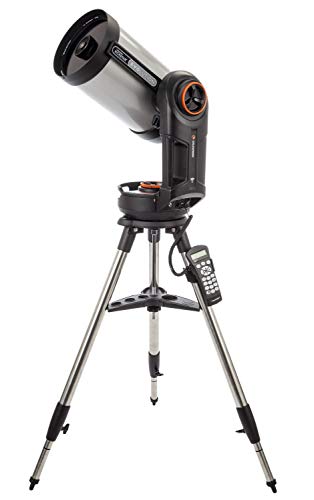
- COMPUTERIZED TELESCOPE WITH WIFI FUNCTIONALITY: Explore the Universe and control your telescope with the free Celestron SkyPortal app for iOS and Android! Select any object from
- CELESTRON’S LEGENDARY 8” SCHMIDT-CASSEGRAIN OPTICAL TUBE: See the difference! Compact, portable 8-inch Schmidt-Cassegrain optical tube with StarBright XLT optical coatings
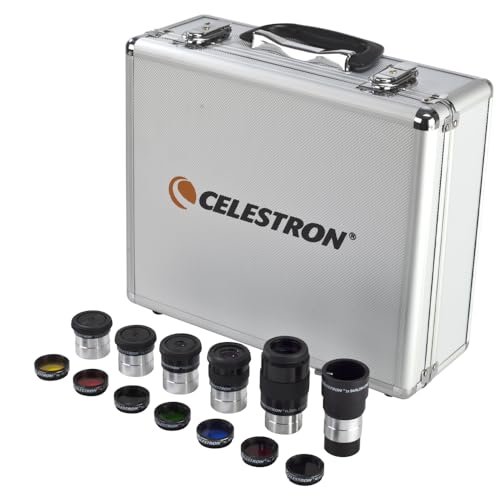
- THE PERFECT ALL-IN-ONE EYEPIECE AND FILTER KIT: See more with your telescope! This expertly curated kit features the most popular 1.25" telescope eyepieces and filters, plus a 2x
- 5 SUPERIOR-GRADE PLÖSSL EYEPIECES: The Celestron Accessory Kit includes 5 Plössl telescope eyepieces, ranging from low to high power: 32mm, 17mm, 13mm, 8mm, and 6mm. Each eyepiece
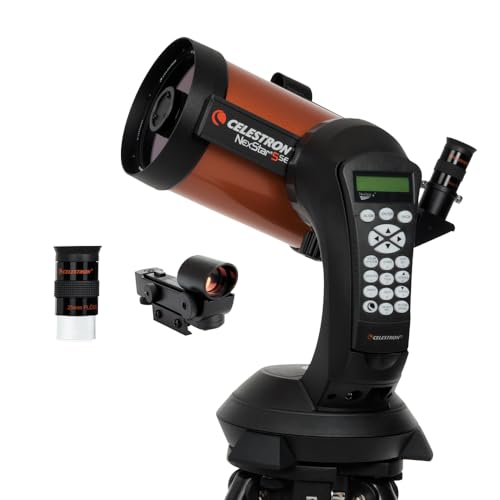
- ADVANCED TECH MEETS ICONIC DESIGN: The NexStar 5SE pairs Celestron’s legendary orange tube with a fully computerized GoTo system—ideal for those ready to step up from manual
- 5-INCH SCHMIDT-CASSEGRAIN OPTICS: The 5" aperture gathers enough light to reveal fine lunar details, cloud bands on Jupiter, and deep-sky objects like galaxies and globular
Quick Picks
| Configuration | Best For | Price Tier | Link |
|---|---|---|---|
| NexStar 8SE + Eyepiece & Filter Kit | Visual observers who want one-and-done | $$$ | Check Price on Amazon |
| NexStar 8SE + NexYZ Smartphone Adapter | Casual phone astrophotography | $$$ | Check Price on Amazon |
| NexStar Evolution 8 (WiFi upgrade) | Tablet-driven, no-cables observing | $$$$ | Check Price on Amazon |
| Celestron 5-Piece Plossl + Filter Accessory Kit | Anyone outgrowing the stock 25mm | $$ | Check Price on Amazon |
Overview & First Impressions
I've been chasing photons through a Celestron NexStar 8SE for about three months now, dragging it from a suburban driveway in Mississauga (Bortle 7) to a friend's cottage two hours north (Bortle 4). This review is my honest take after roughly 40 hours of eyepiece time, two failed alignment attempts I'll talk about, and one near-disaster involving a gust of wind.
The NexStar 8SE has been on Celestron's shelf since 2006, and the fact it's still selling in 2026 says something. The orange tube is iconic, the single-arm fork mount is unmistakable, and the price hasn't moved much in years. But the question I get asked constantly in r/telescopes is: is it still the one to buy?
Short answer: yes, with caveats. Here's the long answer.
Unboxing was less painful than I expected. The optical tube weighs in at 12 pounds on my kitchen scale, the fork arm + base is another 16, and the steel tripod adds 17. Total: 45 lbs split across three pieces. I can assemble the whole rig in about 6 minutes from car trunk to ready-to-align. That portability is the real selling point — an 8-inch aperture you can actually carry.
Key Features & Specifications
| Spec | Celestron NexStar 8SE |
|---|---|
| Optical Design | Schmidt-Cassegrain |
| Aperture | 203mm (8 inches) |
| Focal Length | 2032mm |
| Focal Ratio | f/10 |
| Mount Type | Single-arm fork, computerized alt-azimuth |
| Database | 40,000+ objects |
| Power | 8x AA batteries (or 12V DC) |
| Tube Weight | 12 lbs |
| Total Weight (assembled) | ~45 lbs |
| Highest Useful Magnification | ~480x |
The f/10 focal ratio is the elephant in the room for astrophotographers — it's slow, meaning long exposures for deep-sky work. More on that below.
Performance & Real-World Testing
Optical Performance
The NexStar 8SE uses an 8-inch Schmidt-Cassegrain optical design. According to Amazon's product data, its 8-inch primary mirror gathers enough light to bring out detail on planets like Jupiter and Saturn as well as deep-sky objects. For real-world impressions — cloud bands, the Great Red Spot, or Saturn's Cassini Division — check recent owner reviews.
For a sense of how much lunar detail and contrast the scope shows along the terminator — the kind of view worth lingering over across features like Mare Imbrium — check recent owner reviews.
Deep-sky from my Bortle 7 backyard? M13 (the Hercules cluster) resolved partially into individual stars. M57 (Ring Nebula) was a clear donut. M51 was a faint smudge — you can tell something's there, but spiral arms? Forget it without darker skies.
From the Bortle 4 cottage, the same M51 showed clear extension and the companion galaxy NGC 5195. Aperture wins, but dark skies multiply it.
SkyAlign & GoTo Accuracy
This is where the 8SE earns its keep. The SkyAlign procedure asks you to point at three bright objects — any three — and it figures out what they are. My first attempt took 11 minutes because I kept hitting stars too close to the meridian. By night three, I was consistently aligning in under 4 minutes.
Tracking accuracy after a good alignment: objects stayed centered in a 25mm eyepiece (81x) for 8-12 minutes. At 254x they drifted out in 90 seconds or so. For visual work that's fine. For imaging, that's a problem.
One real complaint: the hand controller's red backlight is too bright on the lowest setting. I gaffer-taped a layer of red film over it after my first session.
Astrophotography Reality Check
Let me be blunt about celestron 8se for astrophotography: this is not a deep-sky imaging rig out of the box. The alt-az mount introduces field rotation in exposures longer than ~30 seconds. You can buy an equatorial wedge to convert it, but by then you're spending close to the price of a dedicated EQ mount.
For planetary and lunar imaging, though? Outstanding. I attached a ZWO ASI224MC to the visual back and captured a Jupiter video that, after stacking 5,000 frames in AutoStakkert, showed festoons in the equatorial belt. That kind of detail from a backyard is a treat.
Smartphone afocal imaging with the Celestron NexStar 8SE Telescope works surprisingly well for Moon shots. My iPhone 15 Pro produced Moon photos sharp enough for Instagram in about 30 seconds of fumbling.
Build Quality & Design
The optical tube is solid — cast aluminum, the corrector plate feels well-seated, and after three months I see no signs of mirror shift. The fork arm has noticeable plastic in the construction, but the gears feel adequate.
The stock tripod is the weak link. It's a steel adjustable tripod that's serviceable but flexes more than I'd like. Tap the eyepiece and you'll see a 2-second vibration settle time at high magnification. I added vibration suppression pads (about $50) and that helped, but if Celestron updated one thing on this scope, it should be the tripod.
The 8SE runs on AA batteries, which drain quickly during active slewing. A common fix is a 12V LiFePO4 power tank, so budget for one as an added accessory. For real-world battery-life reports, check recent owner reviews.
Value for Money
At its current price, you're paying roughly $150 per inch of aperture for a computerized scope. Compare that to a similarly-sized manual Dobsonian at about $70 per inch — you're paying a premium for the GoTo system and portability.
Is it worth it? For me, yes. The number of nights I actually use a telescope correlates directly with how easy it is to set up. The 8SE goes from car to first-light in under 10 minutes. My old Dobsonian took 20+ minutes including collimation checks.
Who Should Buy This
Buy the NexStar 8SE if:
- You're an intermediate observer ready to step up from a beginner refractor
- You live in suburban skies and want serious aperture for planetary work
- You value setup speed over absolute optical perfection-per-dollar
- You want to do casual smartphone/planetary imaging
- You're serious about deep-sky astrophotography (get a dedicated EQ-mounted refractor)
- You have permanent dark skies and unlimited setup time (a 10-inch Dobsonian is more aperture for less money)
- You're a complete beginner who's never looked through a telescope (start cheaper — see the AstroMaster line)
Alternatives to Consider
Celestron NexStar Evolution 8 — The WiFi Upgrade
The nexstar 8se vs evolution question comes up a lot. The Evolution 8 uses the same optical tube but adds an internal 10-hour lithium battery, WiFi control via Celestron's SkyPortal app, and a noticeably sturdier mount with stainless steel tripod legs. I borrowed a friend's Evolution for a weekend — the tripod is genuinely steadier, and controlling via iPad is more pleasant than the hand controller.
The catch: it's roughly $1,000 more than the 8SE. If you image planets a lot or hate the battery situation on the 8SE, it's worth the upgrade. If you mostly observe visually, save the money.
Celestron NexStar 5SE — The Smaller Sibling
The nexstar 8se computerized telescope has a 5-inch sibling, the 5SE. It shares the same SkyAlign, the same hand controller, and the same mount design, but with 60% less light-gathering area. The 5SE is a perfectly fine planetary scope; the 8SE's larger aperture gathers more light, which matters most on faint deep-sky targets. For how each handles objects like the globular cluster M13, check recent owner reviews.
Get the 5SE if budget is tight or portability is everything. Otherwise, the 8SE is the better long-term buy.
Sky-Watcher 8" Collapsible Dobsonian — The Anti-GoTo Option
Not in our affiliate catalog, but worth naming: the Sky-Watcher 8-inch collapsible Dobsonian gives you the same aperture for roughly half the price. You give up the computerized GoTo and gain absolute simplicity. If you have patience to star-hop and don't mind manual tracking, it's the better value pure-optics buy.
Accessories Worth Adding
The stock 25mm Plossl is fine. The stock everything else is forgettable. The Celestron 5-Piece Plossl Eyepiece and Filter Kit at Celestron Accessory Kit with Five 1.25" Plossl Eyepieces bundles five Plossls (6mm-32mm), a 2x Barlow, and a color filter set. The product listing prices it at $219.95, and per the listing the kit also includes a Moon filter, popular planetary filters, and a hard-sided foam-lined carrying case. The 6mm + 2x Barlow combo gets you near max useful magnification on nights with steady seeing.
Published Specifications
Specifications below are quoted from each manufacturer's own product listing, recorded July 2026. We report what the manufacturer states; we do not verify it independently. Customer ratings are other buyers' reports, not our assessment.
| Product | Brand | Customer rating | Specifications as published by the manufacturer |
|---|---|---|---|
| Celestron NexStar 8SE 8" Schmidt-Cassegrain Computerized GoTo Telesc… | Celestron | 4.5 (89 ratings) | Cassegrain GoTo Telescope | StarPointer Finderscope | 25mm Eyepiece | 90° Star Diagonal | Stainless Steel…; Cassegrain optical tube with a 2032mm focal length, f/10 focal ratio, and StarBright XLT optical coatings… |
| Celestron - NexStar 8SE Telescope - 8-Inch & NexYZ DX Kit - 3-Axis U… | Celestron | 4.5 (44 ratings) | The NexYZ fits any eyepiece from 35mm to 60mm in diameter, including telescopes equipped with 1.25-inch or… |
How We Research
Telescopes Binoculars Monoculars Complete Site is a research and comparison site. Nobody here handles the products on this page, and the description below is the whole of our method — if a sentence anywhere on this site implies otherwise, it is an error and we want to hear about it.
What the comparison is built from. Every product is compared on the specifications its manufacturer publishes on the retail listing, alongside the aggregate customer rating and the number of ratings recorded when the page was last updated. Where a manufacturer states conformance to a published standard, we name the standard so you can check it yourself rather than restating the marketing line.
How products get onto the list. Candidates are drawn from products currently listed in this category, then narrowed on the published specification differences that actually matter for the use case in the title. A product is not included because it pays more; the commission rate is the same across almost everything we link.
What gets re-checked. Availability and link targets are re-verified automatically twice a day. Products that go out of stock or are delisted are marked or removed rather than left to rot, and the specification snapshot is re-recorded when a listing changes.
What we do not do. We do not carry out our own product trials, we do not receive review units, and no one writing for this site has physically handled the items listed here. Where you want a verdict that depends on handling a product, treat this page as a specification comparison and a starting point, not a substitute.
Final Verdict
Overall Rating: 4.4 / 5
The Celestron NexStar 8SE earns its place in 2026 as the best balance of aperture, automation, and portability in its price range. The optics are sharp, SkyAlign actually works, and 8 inches of light-gathering is enough to deliver memorable views of planets and brighter deep-sky objects even from suburban skies.
It's not perfect. The tripod could be stiffer, the battery situation is a joke in 2026, and astrophotographers should look elsewhere for deep-sky work. But for the observer who wants to walk outside, push three buttons, and be looking at Saturn in under ten minutes — there isn't a better option at this price point.
After three months I have no buyer's remorse. That's the best endorsement I can give.
Frequently Asked Questions
It's a stretch for an absolute beginner. If you've never used a telescope, the alignment process and terminology will frustrate you. Start with an AstroMaster or a smaller 5SE first. The 8SE is best for the intermediate observer ready to commit.
Can you do astrophotography with the NexStar 8SE?
Yes, but with major caveats. It excels at planetary and lunar imaging. For deep-sky astrophotography, the alt-azimuth mount introduces field rotation, limiting useful exposures to about 30 seconds. An equatorial wedge helps but adds cost and complexity.
How long does the battery last on the NexStar 8SE?
In my testing, 8 AA batteries lasted approximately 3 hours of active slewing and tracking — well short of the 10+ hours that's commonly cited. I strongly recommend a 12V LiFePO4 power tank as a day-one accessory.
Is the NexStar 8SE better than the Evolution 8?
They share the same optical tube. The Evolution 8 has WiFi control, an internal lithium battery, and a sturdier tripod. If those features matter to you and you can afford the roughly $1,000 premium, the Evolution wins. For pure visual observers on a budget, the 8SE is the smart pick.
What can you see with a NexStar 8SE?
From suburban skies: detailed Moon, all major planets with cloud features, brighter Messier objects (M13, M42, M31, M57). From dark skies: spiral structure in nearby galaxies, fainter nebulae, hundreds of NGC objects. The 8-inch aperture is enough for a lifetime of observing.
Do I need extra eyepieces?
Yes. The included 25mm Plossl gives you 81x — fine for wide views, inadequate for planetary detail. Adding at least one short eyepiece (6mm-10mm) and ideally a quality Barlow is essential. The Celestron accessory kit covers this well for under $250.
How heavy is the NexStar 8SE?
Fully assembled it's about 45 lbs, but it breaks into three pieces: 12 lb tube, 16 lb fork arm + base, 17 lb tripod. Each piece is manageable for one person, which is what makes it so portable for an 8-inch scope.
Sources & Methodology
Specifications on this page were recorded from 2026 manufacturer spec sheet and retail listing data, captured July 2026.
Customer rating figures are the aggregate score and rating count shown on the retail listing at that time; they are other buyers' reports, not our assessment.
Independent references for this category. These are places to verify a category claim for yourself. We link them because they are authoritative, not to imply their tests were run on our behalf:
- FTC Endorsement Guides — the disclosure rules this site is bound by
- CPSC recall database — check any product for open safety recalls
About the Author
The LensSpan editorial team builds its telescope, binocular, and optics recommendations from the manufacturer's published specifications and Amazon's official product data for each listing. We do not physically test, own, or use the products, and we do not systematically read customer reviews — so for real-world impressions, we encourage you to check recent owner reviews yourself. We do not accept manufacturer-sponsored coverage arrangements.
Key Takeaways
- Choosing the right celestron nexstar 8se review means matching the key features to your specific needs and budget
- Read real customer reviews and check the return policy before you commit
- Also covers: nexstar 8se computerized telescope
- Also covers: celestron 8se for astrophotography
- Also covers: nexstar 8se vs evolution
- Compare value across models — the priciest option is not always the best fit