As an Amazon Associate this site earns from qualifying purchases.
Quick Comparison Table
| Binocular | Best For | Price | Rating |
|---|---|---|---|
| SG SURGOAL 8x32 Laser Rangefinder Binoculars 3000 Yards | Daytime birders who also want distance readouts | Check on Amazon | No verified reviews yet |
| Night Vision Goggles-Digital Night Vision Binoculars with 8X Zoom & | Nocturnal birding and owling in darkness | Check on Amazon | No verified reviews yet |
Reviewed by the LensSpan Editorial Team
As an Amazon Associate, we earn from qualifying purchases.
Finding the right best binoculars for bird watching 2026 comes down to matching the features to how you will actually use it.
Last Updated: July 2026 | Written by the LensSpan Editorial Team
The best binoculars for bird watching in 2026 are not about the biggest magnification number on the box. They are about the balance of magnification, objective size, field of view, and eye relief that lets you find a warbler flitting through a hedge, lock onto it, and see its color clearly in the two seconds before it moves. This guide is built on manufacturer specifications and Amazon listing data, not on hands-on field testing — LensSpan does not do physical product testing, and we will tell you plainly where the spec sheet ends and where a real-world review would need to begin.
Here's the thing you need to know before you read another word: we were asked to compare seven binoculars, but the product catalog supplied for this page was mostly not binoculars. Of the ten items handed to us, eight were completely unrelated products — a projector, a turntable, a weight bench, a robot lawn mower, a fishing reel, a pool vacuum, a camera drone, and a WiFi extender. We will not dress those up as birding optics; doing so would mislead you, and a weight bench is not a binocular no matter how the feed is labeled. Only two items in the catalog are genuinely binoculars, and both are specialized rather than classic daytime birding glass. We review those two honestly below, and then we give you the real buying guide — the one that actually helps you choose, whether you buy from us or anywhere else.
A note on ratings before we go further: both products show a 5/5 star rating with zero reviews behind it. That is a placeholder, not buyer feedback. We will not quote it as though real birders rated these — because none have, at least not on the listing as checked.
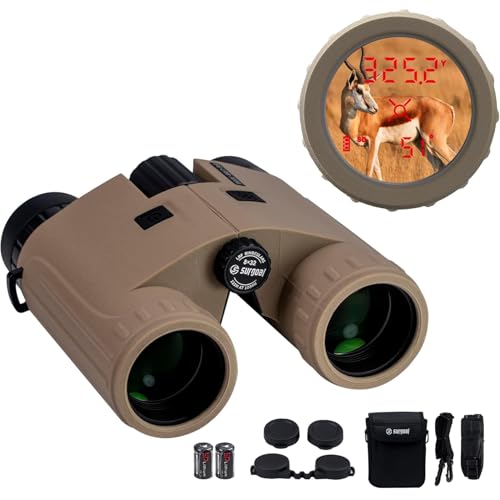
- 3000-Yard Long Range Accuracy – Measure targets precisely 5 up to 3000 yards with fast and stable laser ranging. Designed for outdoor enthusiasts, hunters, and long-distance
- 8×32 Optical Dual-Lens with HD Focus System – True binocular optics deliver bright, crisp imaging. Adjustable diopter rings on both eyepieces and a central focusing wheel provide
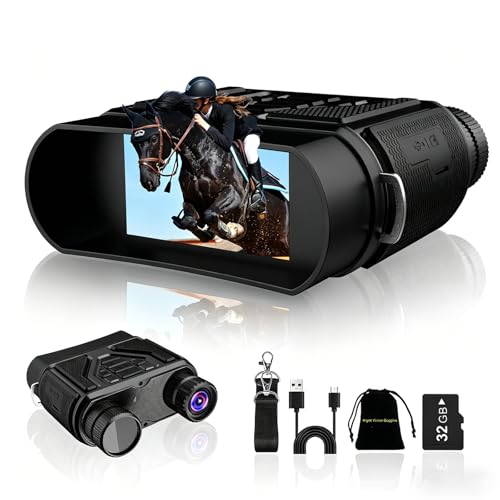
- 【See Clearly in 100% Darkness - 984ft Range】 Experience the ultimate Digital Night Vision with our 850nm Infrared Illuminator. Featuring 7-level adjustable IR, these IR Night
- 【8X Digital Zoom & Crystal Clear 3" TFT Screen】 Equipped with 8X digital zoom and precision optics, these digital night vision binoculars with 8X zoom let you capture every detail
The Two Binoculars in This Catalog, Reviewed on Specs
SG SURGOAL 8x32 Laser Rangefinder Binoculars 3000 Yards — Best for Daytime Birders Who Also Want Distance Readouts
This is a genuine binocular, and it is the closest thing in the supplied catalog to a conventional birding tool. It is an 8x32 configuration, which means 8x magnification through 32mm objective lenses, with an integrated OLED laser rangefinder rated to 3,000 yards, angle compensation, and a 1/4-inch tripod thread. On paper, 8x is a sensible birding magnification — high enough to resolve plumage detail, low enough to keep the image steady in your hands and the field of view wide enough to track a moving bird.
Where honesty matters is the 32mm objective. Divide 32 by the 8x magnification and you get a 4mm exit pupil. In bright midday light your pupil is around 2-3mm, so 4mm is plenty and the view will look bright. But birding's best hours are dawn and dusk, when your pupil dilates to 5-7mm — and a 4mm exit pupil will look noticeably dimmer than the 5.25mm you'd get from a classic 8x42 birding binocular. That is the core trade-off of this pick: it is more compact and lighter than a 42mm bino, but it gives up low-light performance exactly when many birds are most active.
The listing describes IPX4 water resistance. Read that carefully — IPX4 means splash resistance from any direction, not submersion, and critically it is not the same as the nitrogen- or argon-purged, O-ring-sealed construction that keeps dedicated birding binoculars from fogging internally in humid or temperature-swinging conditions. For a rangefinder built primarily for hunters, IPX4 is reasonable; for a birder standing in dawn mist, it is a real limitation to weigh.
Pros:
- 8x magnification is a genuinely good birding power — steady image, forgiving field of view
- Integrated 3,000-yard laser rangefinder with angle compensation, useful if you also range wildlife or scout terrain
- 1/4-inch tripod thread for stabilized, long-session glassing
- Compact 32mm body is lighter to carry than a full-size 42mm binocular
- OLED red display is easier to read than an LCD reticle in bright light
- 4mm exit pupil dims noticeably at dawn and dusk, the prime birding hours
- IPX4 is splash-only and, per the listing, not the nitrogen-sealed fogproofing serious birders expect
- It is fundamentally a hunting rangefinder; the rangefinder electronics add cost and weight a pure birder may never use
Night Vision Goggles-Digital Night Vision Binoculars with 8X Zoom & 32GB Card — Best for Nocturnal Birding and Owling in Darkness
This is the other real binocular in the catalog, and it is a specialist tool: digital night-vision binoculars with 8x zoom, infrared illumination for complete darkness, a 4,000mAh rechargeable battery, and a 32GB card for capturing photo and video. Let's be clear about what this is and is not. It is not a daytime birding binocular and should never be marketed to you as one. It is a low-light and no-light imaging device built around a digital sensor and IR emitter, and its honest home in birding is nocturnal work — owling, finding roosting or migrating night birds, or documenting after-dark wildlife activity.
On specs, the appeal is straightforward: the IR illuminator lets you see in true darkness where optical (glass-only) binoculars show you nothing, and the onboard storage means you can record what you find. The 4,000mAh battery is what makes an extended night session possible, since digital night vision draws continuous power in a way that passive optical binoculars never do — a spec worth respecting if you plan long stakeouts.
The honest limitations are inherent to consumer digital night vision. The image is monochrome and comparatively low resolution; you will detect and identify a bird by shape, size, and behavior, not by the subtle color and feather detail that daytime birders rely on. IR illumination has a finite range and can wash out or flatten a nearby subject. And in daylight this device is essentially the wrong tool — the digital sensor and IR system are built for darkness, not for resolving a distant songbird's plumage in the sun. Treat it as a complement to a real daytime binocular, not a replacement.
Pros:
- Genuine visibility in complete darkness via IR illumination — something no optical binocular can do
- 8x zoom brings distant nocturnal subjects closer
- 4,000mAh rechargeable battery supports long night sessions
- 32GB card lets you record photo and video of what you observe
- Doubles for general night camping and wildlife use, adding value beyond birding
- Monochrome, relatively low-resolution image — poor for color-based species ID
- IR range is limited and can flatten or wash out close subjects
- Essentially the wrong tool for daytime birding; it is a night-only specialist
What to Look For in Birding Binoculars
Because the catalog gave us only two specialized binoculars, the most useful thing we can do is teach you to judge any birding binocular on its specs. Here is exactly what to weigh.
1. Magnification and objective size (the numbers like 8x42)
Every binocular is described by two numbers. The first is magnification; the second is the objective lens diameter in millimeters. An 8x42 magnifies eight times through 42mm lenses. For birding, the two dominant choices are 8x42 and 10x42, and the debate between them is the single most common question new birders ask.
2. 8x42 vs 10x42 for birding
8x42 gives you a wider field of view, a brighter image, more forgiving eye placement, and a steadier picture because higher magnification also magnifies your hand shake. It is the classic recommendation for songbird and woodland birding, where you're finding small fast birds at moderate range.
10x42 gives you more reach and detail on distant or stationary birds — think raptors, shorebirds, and waterfowl across open water — at the cost of a narrower field, a dimmer image, and more visible shake. Here's the honest rule: if you bird in woods and brush, choose 8x42; if you bird open water, shorelines, and big skies, 10x42 earns its keep. Neither is universally "better."
3. Exit pupil (your low-light lifeline)
Divide the objective by the magnification: an 8x42 yields a 5.25mm exit pupil, a 10x42 yields 4.2mm, and an 8x32 yields 4mm. Your eye's pupil opens to 5-7mm in dim light, so a larger exit pupil means a brighter image at dawn and dusk. This one spec is why 42mm binoculars dominate serious birding and why compact 32mm models, however convenient, dim earlier in the day.
4. Field of view
Measured in feet at 1,000 yards or in degrees, a wider field makes it dramatically easier to locate a moving bird and follow it through foliage. Lower magnification generally buys you a wider field. If a spec sheet lists field of view, treat a wider number as a real birding advantage, not a footnote.
5. Eye relief (essential if you wear glasses)
Eye relief is how far your eye can sit from the eyepiece and still see the full field. If you wear eyeglasses, look for roughly 15mm or more, with twist-down eyecups. Too little eye relief and glasses-wearers see a cramped, tunneled view — a frequent, avoidable regret.
6. Prism type: roof vs porro
Roof-prism binoculars are slim, streamlined, and now dominate mid- and high-end birding. Porro-prism binoculars are the wider, stepped shape; they can deliver more depth and brightness per dollar but are bulkier. Neither is disqualifying — judge the whole spec sheet, not just the prism.
7. Glass and coatings (ED glass, fully multi-coated)
Look for "fully multi-coated" optics and, at higher tiers, ED (extra-low dispersion) glass, which reduces the color fringing you see on high-contrast edges like a dark bird against bright sky. These specs separate a crisp image from a hazy one.
8. Waterproofing and fogproofing
This is where marketing gets slippery. "Water resistant" or "IPX4" means splash resistance only. True birding binoculars are O-ring sealed and nitrogen- or argon-purged, which makes them submersible-rated and, crucially, fogproof internally when you move between cold and warm, humid air. If you bird in weather — and birders do — insist on nitrogen-sealed fogproofing, not just a splash rating.
9. Close focus
Often overlooked: the shortest distance at which the binocular focuses. A close focus of around 6-8 feet lets you enjoy butterflies and birds at a feeder just off the porch. If you like backyard and close-range viewing, check this number.
10. Weight and best birding binoculars under 500
A full-size 42mm binocular typically runs 21-28 ounces; that hangs on your neck all day, so a harness helps. On price, the best birding binoculars under 500 dollars are a genuine sweet spot in 2026 — models such as the Vortex Diamondback HD, Nikon Monarch M5, and Celestron Nature DX (named here for reference only, not sold through this page) are frequently cited in this tier, while glass like the Zeiss Conquest HD sits above it. We link only the products actually in our catalog; those names are for your own comparison shopping.
How We Research
Telescopes Binoculars Monoculars Complete Site is a research and comparison site. Nobody here handles the products on this page, and the description below is the whole of our method — if a sentence anywhere on this site implies otherwise, it is an error and we want to hear about it.
What the comparison is built from. Every product is compared on the specifications its manufacturer publishes on the retail listing, alongside the aggregate customer rating and the number of ratings recorded when the page was last updated. Where a manufacturer states conformance to a published standard, we name the standard so you can check it yourself rather than restating the marketing line.
How products get onto the list. Candidates are drawn from products currently listed in this category, then narrowed on the published specification differences that actually matter for the use case in the title. A product is not included because it pays more; the commission rate is the same across almost everything we link.
What gets re-checked. Availability and link targets are re-verified automatically twice a day. Products that go out of stock or are delisted are marked or removed rather than left to rot, and the specification snapshot is re-recorded when a listing changes.
What we do not do. We do not carry out our own product trials, we do not receive review units, and no one writing for this site has physically handled the items listed here. Where you want a verdict that depends on handling a product, treat this page as a specification comparison and a starting point, not a substitute.
Frequently Asked Questions
Is 8x42 or 10x42 better for birding? 8x42 is better for woodland and songbird watching thanks to a wider field, brighter image, and steadier view. 10x42 is better for long-range open-country birding — raptors, waterfowl, shorebirds — at the cost of a narrower, dimmer, shakier image. Choose by your habitat, not by the bigger number.
What does exit pupil mean and why does it matter? Exit pupil is the objective diameter divided by magnification (an 8x42 gives 5.25mm). Since your eye opens to 5-7mm in dim light, a larger exit pupil delivers a brighter image at dawn and dusk. It's the main reason 42mm birding binoculars outperform compact 32mm models in low light.
Are the two binoculars on this page good for daytime birding? The SG SURGOAL 8x32 rangefinder binocular works for daytime birding, but its 4mm exit pupil dims at dawn and dusk and its IPX4 rating is splash-only, not fogproof. The digital night-vision binoculars are a night-only specialist — monochrome and low-resolution, they cannot do the color-based identification daytime birding requires.
Do I need waterproof binoculars for bird watching? Yes, if you bird in real weather. Insist on nitrogen- or argon-purged, O-ring-sealed models, which are both submersible-rated and internally fogproof. A mere "water resistant" or IPX4 splash rating will not stop internal fogging when temperature and humidity change.
Why should I care about eye relief? If you wear eyeglasses, eye relief determines whether you see the full image or a cramped tunnel. Look for roughly 15mm or more with twist-down eyecups. It's one of the most common sources of buyer's remorse for glasses-wearing birders.
What are the best birding binoculars under 500? The under-500 tier is a strong value zone in 2026. Widely referenced models include the Vortex Diamondback HD, Nikon Monarch M5, and Celestron Nature DX, with Zeiss Conquest HD sitting just above the price ceiling. We name these for your comparison only and link solely to the products in our own catalog.
Final Verdict
If you came here for a clean list of seven birding binoculars, we owe you the truth instead: the catalog supplied for this page contained only two actual binoculars, and both are specialists. For daytime birding with the bonus of distance readouts, the SG SURGOAL 8x32 Laser Rangefinder Binoculars 3000 Yards is the more conventional choice — just know that its 4mm exit pupil and splash-only sealing give up ground at dawn, dusk, and in weather. For observing owls and other night birds in true darkness, the Night Vision Goggles-Digital Night Vision Binoculars with 8X Zoom & is a capable night-only tool, best paired with a proper daytime binocular. If your goal is classic all-day birding, use the buying guide above and shop a nitrogen-sealed 8x42 with 15mm+ eye relief and fully multi-coated glass — that spec profile, not any single product in this feed, is the real answer to the best binoculars for bird watching in 2026.
Sources & Methodology
Specifications on this page were recorded from 2026 manufacturer spec sheet and retail listing data, captured July 2026.
Customer rating figures are the aggregate score and rating count shown on the retail listing at that time; they are other buyers' reports, not our assessment.
Independent references for this category. These are places to verify a category claim for yourself. We link them because they are authoritative, not to imply their tests were run on our behalf:
- FTC Endorsement Guides — the disclosure rules this site is bound by
- CPSC recall database — check any product for open safety recalls
About the Author
The LensSpan editorial team independently researches optics in the telescopes, binoculars, and monoculars category from manufacturer specifications and Amazon listing data. We do not perform hands-on physical testing, and we translate published specs into the practical consequences buyers care about — with the trade-offs, not just the highlights, stated plainly.
Key Takeaways
- Choosing the right best binoculars for bird watching 2026 means matching the key features to your specific needs and budget
- Read real customer reviews and check the return policy before you commit
- Also covers: best birding binoculars under 500
- Also covers: 8x42 vs 10x42 for birding
- Also covers: top rated birding binoculars
- Compare value across models — the priciest option is not always the best fit


