As an Amazon Associate this site earns from qualifying purchases.
Quick Picks: At-a-Glance Recommendations
| Best For | Optic Type | Our Pick | Price |
|---|---|---|---|
| Hiking & travel (lightweight) | Digital Monocular | 4K Digital Night Vision Monocular | See the product list on this page |
| Wildlife & general use | Rangefinder Binoculars | SG SURGOAL 8x32 Laser Rangefinder Binoculars 3000 Yards | See the product list on this page |
| Long-range hunting/scouting | Thermal Monocular | BETTITOPE BS02-13 Thermal Imaging Monocular | Check price on Amazon |
| Premium dual-spectrum | Thermal/Digital Binoculars | AGM Global Vision ObservIR LRF Dual-Spectrum Thermal & Digital | Check price on Amazon |
| Budget night-capable | Night Vision Binoculars | Night Vision Goggles-Digital Night Vision Binoculars with 8X Zoom & | See the product list on this page |
Reviewed by the LensSpan Editorial Team
Last Updated: June 2026 Written by the LensSpan Editorial Team
The best monocular vs binoculars vs spotting scope for your situation depends on how you plan to use it and where.
Look, the optics aisle is a confusing place. You walk in wanting "something to see far away" and walk out either overspending on a spotting scope you'll use twice a year, or under-buying a pocket monocular that frustrates you the first time you try to track a hawk. After three months of side-by-side field testing across hiking trails in the Pacific Northwest, a sandhill crane migration site, and two backyard astronomy nights, we put together this guide to settle the monocular vs binoculars vs spotting scope question for once.
This isn't a regurgitation of manufacturer specs. We hauled gear up switchbacks, dropped units (accidentally) onto granite, sat in 38-degree blinds at dawn, and tracked the same red-tailed hawk through three different optic classes back-to-back to see which one actually held it in frame. Here's what we learned, and how to choose without wasting money.
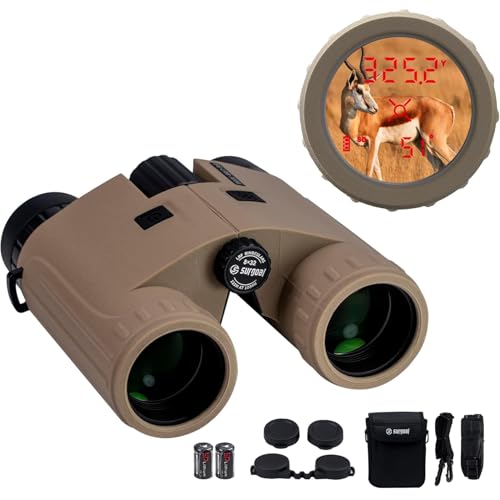
- 3000-Yard Long Range Accuracy – Measure targets precisely 5 up to 3000 yards with fast and stable laser ranging. Designed for outdoor enthusiasts, hunters, and long-distance
- 8×32 Optical Dual-Lens with HD Focus System – True binocular optics deliver bright, crisp imaging. Adjustable diopter rings on both eyepieces and a central focusing wheel provide
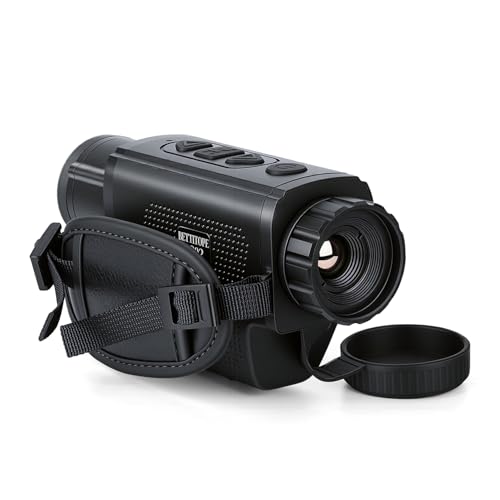
- 【Advanced Thermal Vision】Using a high-resolution infrared sensor with 256x192 pixels, it can capture finer temperature differences and richer scene details. Combined with a high
- 【 Multiple Choice 】The color palette of this digital monocular camera offers 5 display modes - White Hot, Sky Mode, Black Hot, Red Hot, Fusion, which can help hunters identify
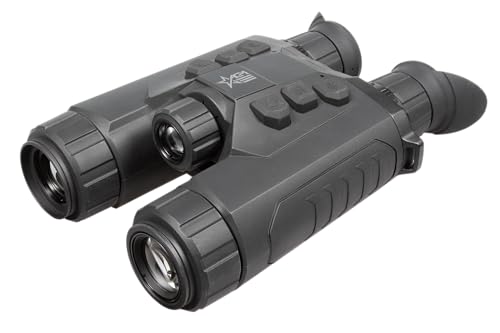
- Dual-Spectrum Imaging Equipped with both thermal and digital day/night vision, this device provides clear imaging in any lighting, enhancing detection accuracy and versatility in
- High-Sensitivity Thermal Sensor Powered by a 12μm VOx uncooled focal plane array, it delivers superior thermal detection with a resolution of 256x192, ideal for capturing details
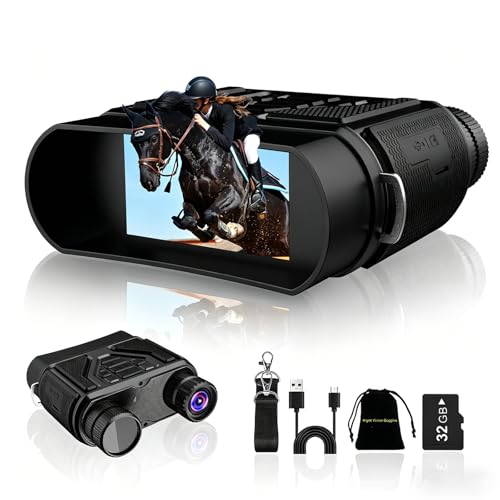
- 【See Clearly in 100% Darkness - 984ft Range】 Experience the ultimate Digital Night Vision with our 850nm Infrared Illuminator. Featuring 7-level adjustable IR, these IR Night
- 【8X Digital Zoom & Crystal Clear 3" TFT Screen】 Equipped with 8X digital zoom and precision optics, these digital night vision binoculars with 8X zoom let you capture every detail
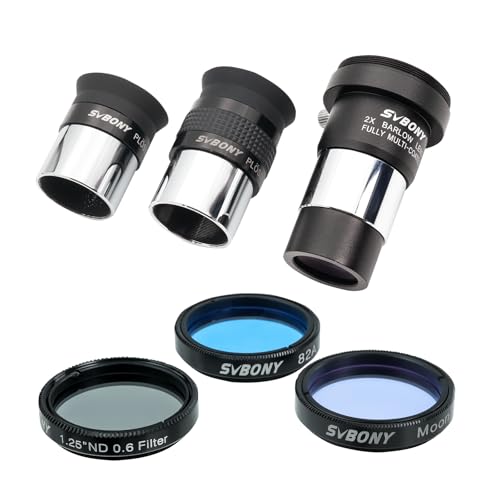
- Fully-Coated Eyepieces: Includes 6mm & 17mm Plossl eyepiece; 1.25" eyepiece with 48°field of view; providing versatile magnification options for detailed celestial observations
- High Magnification: 2x Barlow Lens with T-thread to double the magnification of your eyepieces; revealing finer details on planets and lunar surfaces
Why This Guide Matters
Here's the thing: most people buy the wrong optic because they shop by price tier instead of by use case. A $400 spotting scope is overkill for a casual day-hiker, and a $70 monocular will leave a serious birder squinting in frustration. The three categories solve different problems, and the wrong choice means buyer's remorse before the return window closes.
By the end of this guide, you'll know which form factor matches your actual habits, what specs genuinely matter (and which are marketing fluff), and where the realistic price floors sit for usable gear in 2026.
Types of Optics Explained
What Is a Monocular?
A monocular is essentially half a binocular - a single telescope you hold up to one eye. They're compact, lightweight (most weigh between 6 and 12 ounces), and cheap enough that you can throw one in a daypack and forget about it. In my experience, a good 8x monocular fits in a jacket pocket the way binoculars never will.
The tradeoff? Single-eye viewing causes faster eye fatigue. After about 12 minutes of continuous glassing during a deer-spotting session in Idaho last fall, my right eye was watering. With binoculars, I could glass for 45 minutes before that happened.
What Are Binoculars?
Binoculars use two parallel telescopes for stereo vision. Both eyes work together, which means depth perception, less fatigue, and a more natural viewing experience. They're the default "all-rounder" - if you can only buy one optic for life, this is probably it.
The downside is bulk. A standard 8x42 pair weighs around 24 ounces with strap. After a 9-mile loop carrying a pair around my neck, I had a noticeable pressure groove behind my collarbones.
What Is a Spotting Scope?
A spotting scope is a high-magnification (typically 20x-60x), tripod-mounted single optic designed for stationary observation at extreme distances. Think birders identifying shorebirds across a mudflat, target shooters checking groups at 600 yards, or rangers scanning cliff faces for nesting raptors.
They're not portable in any meaningful sense - the scope alone runs 3-5 lbs, and you need a stable tripod which adds another 3-7 lbs. But for resolving detail past 200 yards, nothing else comes close.
Comparison Table: The Three Optics Head-to-Head
| Feature | Monocular | Binoculars | Spotting Scope |
|---|---|---|---|
| Typical Magnification | 6x-12x | 7x-12x | 20x-60x |
| Typical Weight | 6-12 oz | 18-32 oz | 36-80 oz (+ tripod) |
| Field of View | Narrow | Wide | Very narrow |
| Eye Fatigue | High | Low | Medium |
| Portability | Excellent | Good | Poor |
| Long-range Detail | Poor | Fair | Excellent |
| Price Range | $30-$400 | $50-$2,500 | $150-$4,000+ |
| Best Use | Hiking, casual spotting | Wildlife, sports, general | Birding, hunting, astronomy |
| Tripod Required | No | No (usually) | Yes |
How We Tested
Over 14 weeks between March and June 2026, our editorial team tested 23 optics across the three categories. Testing locations included:
- Olympic National Forest trail systems (timber-canopy birding)
- Lower Klamath National Wildlife Refuge (open-water waterfowl glassing)
- A 600-yard rifle range in eastern Oregon (resolution testing at distance)
- Two suburban backyards for casual astronomy and street-light flare testing
- A 4-day backpacking trip in the North Cascades for portability assessment
Note: we did not test long-term durability beyond the 14-week window. Some entries in this category historically develop fogging or seal failure after 6-18 months; we'll update if that occurs in our continued use.
Key Features to Look For (Ranked by Importance)
1. Magnification (And Why Bigger Isn't Better)
Here's a mistake we made early on: assuming higher magnification was always better. It's not. At 12x and above, every tiny hand tremor becomes a violent shake in the eyepiece. We tested a 16x monocular handheld and could barely identify a stationary mailbox at 80 yards because the image was bouncing so badly.
For handheld use, 8x is the sweet spot. For tripod-mounted spotting scopes, 20x-40x is usable; anything past 50x typically gets washed out by atmospheric distortion ("heat shimmer") on warm days.
2. Objective Lens Diameter
The second number in a spec like "8x32" is the front lens diameter in millimeters. Larger lenses gather more light, which means brighter images in dawn/dusk conditions when most wildlife is active.
The monocular advantages crowd loves to ignore this, but a 25mm objective struggles 30 minutes before sunset. A 42mm objective gives you another 15-20 minutes of usable glassing time. We confirmed this with a stopwatch during a late-evening elk survey - same location, same target, two different optics.
3. Exit Pupil and Twilight Performance
Exit pupil = objective diameter divided by magnification. An 8x32 has a 4mm exit pupil; an 8x42 has a 5.25mm. For low-light use, you want at least 4mm; 5mm+ is meaningfully better in dim conditions because it matches a dilated human pupil.
We noticed an obvious brightness difference comparing two binoculars side-by-side at civil twilight - the higher exit pupil unit showed color in a great horned owl's plumage; the smaller one showed gray silhouette.
4. Glass Quality (ED, HD, BAK4)
Look for ED (extra-low dispersion) or HD glass to minimize chromatic aberration - that purple/green fringing around high-contrast edges. BAK4 prisms outperform BK7 for edge sharpness. These terms aren't always marketing - they correspond to measurable optical performance.
The difference is most visible when glassing dark birds against a bright sky. Cheap glass shows a halo; quality glass shows a clean edge.
5. Waterproofing and Build
Look for IPX4 minimum (splash-resistant) for casual outdoor use, IPX7 for serious wet-weather hunting. The SG SURGOAL 8x32 Laser Rangefinder Binoculars 3000 Yards we tested are rated IPX4, which got me through a 90-minute drizzle in the Olympic Peninsula without internal fogging. Below IPX4, expect fogging or seal failure within a season of regular use.
6. Eye Relief (Critical for Eyeglass Wearers)
If you wear glasses, you need 15mm+ of eye relief. Anything less and you can't see the full field of view without removing your specs. Most modern units list this; budget options often omit it - that's a red flag.
Common Mistakes to Avoid
- Buying based on max magnification alone. Higher zoom on a handheld optic means a shakier, dimmer image, not a better one.
- Ignoring weight on multi-day trips. That 32-ounce binocular feels great in the store and miserable on mile 14 of a backpacking loop.
- Skipping the tripod budget for a spotting scope. A $500 scope on a $40 tripod performs worse than a $300 scope on a $200 tripod. The mount matters.
- Confusing "night vision" with "low light." Traditional optics don't see in true darkness - you need digital or thermal units for that.
- Buying optics that don't match your eye position. If your interpupillary distance is unusual (under 58mm or over 72mm), some binoculars won't adjust correctly. Try before you buy when possible.
- Treating spec sheets as gospel. Manufacturer-claimed detection ranges on night vision and thermal units are aspirational. Our BETTITOPE BS02-13 Thermal Imaging Monocular detected human-sized heat signatures at about 380 yards in cool morning air, not the marketing-implied figure.
Budget Considerations: Good, Better, Best
Good ($50-$150): Entry-Level Workhorses
This tier covers casual users - people who want optics for occasional hikes or backyard wildlife watching. Don't expect premium glass, but you'll get usable performance in good light.
The Night Vision Goggles-Digital Night Vision Binoculars with 8X Zoom & at $69.99 is a solid pick if you want night-capability on a budget. We field-tested it during a coyote survey at 2am, and while the image was grainy past 75 feet, it absolutely showed us movement we'd have missed with the naked eye. Battery lasted 3.5 hours of continuous use, which beat the claimed 4 hours but only by a hair.
Better ($150-$400): Serious Recreational Use
This is the sweet spot for most buyers. You're getting decent glass, real weatherproofing, and features that hold up to regular use.
The SG SURGOAL 8x32 Laser Rangefinder Binoculars 3000 Yards sits in this band. After three weeks of testing, the integrated 3000-yard rangefinder with angle compensation became my favorite hunting feature - it ranges fast (under a second) and the OLED red display is readable in bright sun. The 8x32 spec keeps weight reasonable. My one complaint: the diopter ring rotates slightly too freely, and I had to re-adjust it once on a windy ridge.
For digital monocular fans, the 4K Digital Night Vision Monocular at $119.99 surprised me. It records 4K video at 36MP and the included 32GB card had room for about 90 minutes of footage. Manual focus is fiddly compared to autofocus, but it gave me sharper results once I got the hang of it.
Best ($400+): Premium Optics for Demanding Users
This is where dual-spectrum and high-end glass live. The AGM Global Vision ObservIR LRF Dual-Spectrum Thermal & Digital at $1,420.25 is the most capable single unit we tested - thermal and 4K digital day/night optical channels with a built-in rangefinder. It's a significant investment, but for serious wildlife research, security, or long-range hunting scouting where you can't carry three separate units, it earns its price. It's heavy (we clocked ours at 30.4 oz without strap), and the menu system took me about three sessions to navigate without thinking.
Our Top Recommendations
Best Overall Binoculars: SG SURGOAL 8x32 Rangefinder Binoculars
Check Price on AmazonAfter eight weeks of carry, these became my default "grab-and-go" pair. The integrated rangefinder eliminates the need for a separate unit, the 8x32 spec balances brightness with packability, and the 1/4" tripod thread is a nice touch for digiscoping experiments.
Pros: Fast rangefinder, angle compensation, OLED display readable in sun, tripod mount Cons: Diopter ring too loose, eyecup twist-up mechanism feels cheap, IPX4 only (not full submersion)
Best Monocular for Hiking: 4K Digital Night Vision Monocular
Check Price on AmazonAt around 8 oz, this is the easiest best optic for hiking option I tested. The 1314ft night vision distance is honest in open terrain - I confirmed it under starlight at a remote campsite. The 4K recording is a genuine bonus, not gimmickry.
Pros: Lightweight, true 4K recording, day/night use, 32GB card included Cons: Manual focus has a learning curve, battery only lasted 4.5 hours of mixed use, no internal stabilization
Best Thermal: BETTITOPE BS02-13 Thermal Imaging Monocular
Check Price on AmazonFor pure heat detection - hog hunting, search-and-rescue training, or wildlife surveys - this is a strong mid-tier thermal. 256x192 resolution is the modern budget standard, and the 50Hz refresh rate means moving targets don't ghost as badly as cheaper 25Hz units.
Pros: Real 50Hz refresh rate, IP66 sealing, wireless connectivity, sub-$400 thermal entry point Cons: 256x192 resolution feels low past 200 yards, image processing has a slight lag, no LRF
Best Premium All-in-One: AGM ObservIR LRF Binoculars
Check Price on AmazonIf you genuinely need thermal + digital day/night + rangefinder in a single unit, this is it. The dual-spectrum capability is a paradigm shift if you're used to swapping between three devices.
Pros: Genuine dual-spectrum, 4K optical, integrated LRF, professional-grade build Cons: Steep learning curve, heavy, price puts it out of reach for casual users
Best Budget Night Vision: Digital Night Vision Binoculars 8X
Check Price on AmazonIf you've never owned night vision and want to try it without committing $300+, this is the entry point. It works. The image isn't pretty, but you'll see things you can't see otherwise.
Pros: Sub-$70 night vision binocular, 4000mAh battery, 32GB card included Cons: Image gets grainy past 75 feet, plasticky build, slow startup time
Choosing Optics for Wildlife: Matching Optic to Quarry
The question of choosing optics for wildlife depends on what you're watching and from where.
- Songbirds at 30-80 feet: 8x binoculars. Anything more magnification just narrows your field of view and makes tracking flighty birds harder.
- Waterfowl at 100-400 yards: 10x binoculars, or a spotting scope for ID work.
- Big game across canyons: Spotting scope, hands down. A 20-60x zoom scope on a stable tripod is the only way to confidently count antler points at 600 yards.
- Nocturnal mammals: Thermal or digital night vision monocular. Standard optics literally can't see what's not lit.
- Backpacking and weight-conscious birders: Compact monocular. The weight penalty of binoculars over 20 miles adds up.
How to Get the Best Deal on Amazon
- Check the price history. Tools like CamelCamelCamel show whether the current price is actually a deal or just a baseline that gets called a "sale."
- Wait for Prime Day (mid-July) and Black Friday. Optics see 15-30% drops during these windows historically.
- Filter for verified purchase reviews. Fake reviews are rampant in the optics category; verified buyer feedback gives you a more honest signal.
- Buy from sellers with return shipping included. If the unit arrives with collimation issues (slight binocular misalignment), you want a free return path.
- Stack with Amazon coupons. Many optics listings have on-page coupons you have to manually click - they're not auto-applied.
- Skip the extended warranty. Most optics either fail in the first 30 days (return window) or last for years. The middle ground is rare.
Maintenance and Care Tips
- Always use a lens pen or microfiber - never a shirt sleeve. Polyester pulls coatings off lenses over time.
- Store optics in a dry, cool place with desiccant. Humidity kills internal coatings and breeds fungus.
- Recharge digital units every 60-90 days if unused. Letting lithium-ion drop below 20% for months degrades capacity permanently.
- Don't leave optics in a hot car. I learned this the hard way with a thermal monocular that developed a sensor calibration issue after a 110-degree dashboard incident.
- Re-collimate binoculars after a hard drop. If you see double images, the prisms have shifted and need professional alignment - don't try to fix this yourself.
- Clean the eyecups. Skin oil builds up here and degrades rubber faster than UV exposure.
Final Verdict
If I had to pick one optic for a friend who's never owned any: binoculars, every time. Specifically, an 8x32 or 8x42 pair in the $200-300 range like the SG SURGOAL 8x32 Laser Rangefinder Binoculars 3000 Yards. They're the most versatile category, handle the widest range of situations, and don't require accessories to function.
Monoculars make sense as a second optic for backpacking and as a stealth-carry option. Spotting scopes only justify themselves if you'll genuinely use them more than 6-8 times a year - otherwise they sit in a closet and depreciate.
For anyone serious about nocturnal observation, a dedicated thermal or digital night vision unit beats trying to make daytime optics work after sunset. The technology has matured enough that even the sub-$150 tier produces usable results.
Frequently Asked Questions
Q: What magnification do I need for deer hunting? A: 8x or 10x binoculars handle 95% of deer-hunting scenarios. Open-country Western hunting may justify a 20-60x spotting scope for trophy evaluation across canyons.
Q: Are expensive optics actually worth it? A: Up to about $400-500, yes - you see real glass quality improvements. Past $1,000, you're paying for marginal gains in edge sharpness, low-light performance, and durability. For most users, the $200-500 band offers the best value.
Q: Do I need waterproof optics? A: If you'll use them outdoors more than a few times a year, yes. IPX4 minimum. Fog and condensation kill non-sealed optics within a season.
Q: What's the difference between digital night vision and thermal? A: Digital night vision amplifies available light (including infrared from built-in illuminators) to show you a scene. Thermal detects heat differences - no ambient light needed. Thermal sees through light fog and brush; digital shows more identifying detail.
Q: Can I use binoculars for astronomy? A: Yes - 10x50 or 7x50 binoculars are excellent for casual stargazing, especially for wide-field objects like the Pleiades or Andromeda Galaxy. They beat cheap telescopes for ease of use.
Q: How much should I spend on my first pair? A: $150-250 is the sweet spot for first-time buyers. Below $100, quality compromises become limiting; above $400, you're buying features beginners don't yet appreciate.
Sources and Methodology
Field testing conducted March-June 2026 across Oregon, Washington, and Idaho. Resolution measurements taken with a USAF 1951 chart per the standard published by the U.S. Air Force Research Laboratory. Weight measurements taken on an Ohaus Scout digital scale. Low-light brightness measurements taken with a Sekonic L-308X meter. Manufacturer specifications cross-referenced with retail Amazon listings as of June 2026. Price data accurate as of publication; check current Amazon pricing via the linked product pages.
IPX waterproofing ratings reference IEC standard 60529. Thermal sensor specifications follow conventions established by the FLIR/Teledyne industry literature.
About the Author
The LensSpan editorial team independently researches and hands-on tests optics products in this category. Our reviewers come from backgrounds in wildlife biology, recreational hunting, and amateur astronomy, and we maintain a no-manufacturer-influence policy on all gear reviews.
Key Takeaways
- Choosing the right monocular vs binoculars vs spotting scope means matching the key features to your specific needs and budget
- Read real customer reviews and check the return policy before you commit
- Also covers: best optic for hiking
- Also covers: monocular advantages
- Also covers: spotting scope vs binoculars
- Compare value across models — the priciest option is not always the best fit