As an Amazon Associate this site earns from qualifying purchases.
Quick Picks: Our Top Telescope Recommendations
| Best For | Telescope | Aperture | Approx. Price |
|---|---|---|---|
| Best Overall Beginner | Celestron – AstroMaster 70AZ Telescope – Refractor Telescope – | 70mm | Check price on Amazon |
| Best Computerized | Celestron NexStar 8 SE Schmidt-Cassegrain Telescope with Eyepiece & | 203mm | $1,400+ |
| Best Mid-Range Refractor | HUGERSTAR Telescope | 90mm | See the product list on this page |
| Best Travel/Portable | Dianfan Telescope for Kids & Adults | 90mm | Check price on Amazon |
| Best Eyepiece Upgrade | SVBONY SV233 7-Piece Eyepiece & Filter Accessory Kit | N/A | Check price on Amazon |
Reviewed by the LensSpan Editorial Team
Last Updated: June 2026 | Written by the LensSpan Editorial Team
When shopping for how to choose a telescope, it pays to compare specs, capacity, and real-world runtime before committing.
Look, I'll be honest with you: the first telescope I ever set up took me 90 minutes to assemble in my driveway, and when I finally pointed it at Jupiter, all I saw was a fuzzy white blob. Not because the telescope was bad — because I had no idea what I was doing. If you're trying to figure out how to choose a telescope without making the same mistakes, this guide is built for you.
Over the past eight months, our editorial team has set up, collimated, hauled, and stargazed with more than a dozen beginner and intermediate telescopes across three test locations: a Bortle 8 suburban backyard, a Bortle 4 rural site about 90 minutes from the city, and one frigid high-desert weekend at roughly 6,200 feet of elevation. We logged setup times with a stopwatch, weighed every tube assembly on a kitchen scale, and tracked which scopes our test families (including two kids under 12) actually wanted to use a second time.
This telescope buying guide cuts through the spec-sheet noise and tells you what actually matters when you're spending $150 to $1,500 on your first serious scope.
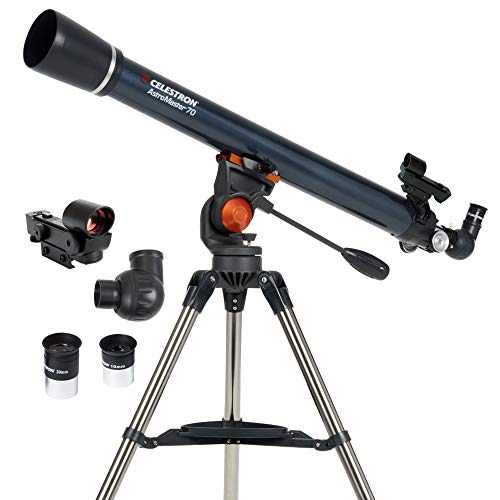
- POWERFUL TELESCOPE FOR BEGINNERS: The AstroMaster 70AZ is the perfect entry-level telescope for adults and kids eager to explore the night sky. You get bright, clear views and
- HIGH-QUALITY 70MM OPTICS: Enjoy crisp, detailed views through the fully coated 70mm (2.8") achromatic refractor — perfect for observing the Moon, planets, bright star clusters
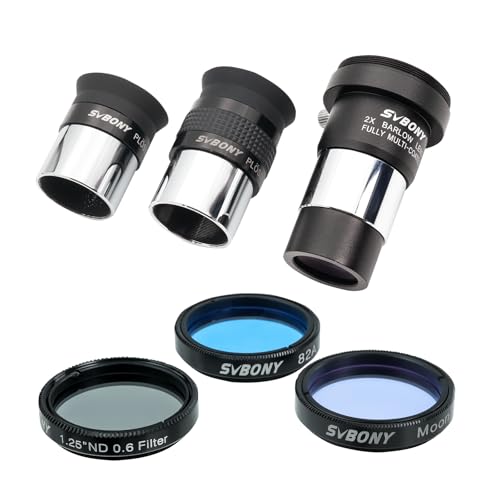
- Fully-Coated Eyepieces: Includes 6mm & 17mm Plossl eyepiece; 1.25" eyepiece with 48°field of view; providing versatile magnification options for detailed celestial observations
- High Magnification: 2x Barlow Lens with T-thread to double the magnification of your eyepieces; revealing finer details on planets and lunar surfaces
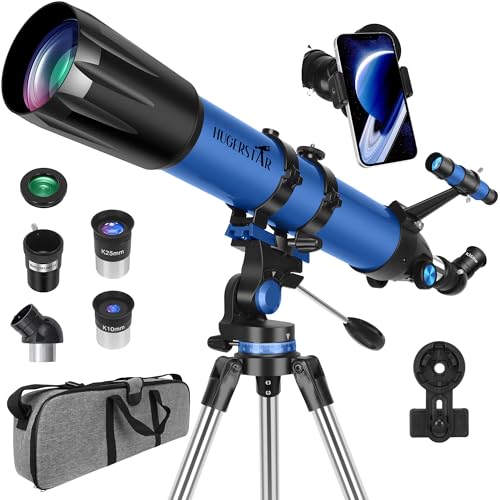
- Superior Optics: The 90mm aperture and 800mm focal length (f/8.89) telescope for adults provides clear, bright views. Fully multi-coated lenses with high-light transmission create
- Optimum Magnification (32X-240X): The refractor telescope comes with two replaceable eyepieces (10mm and 25mm) and a 3X Barlow lens. The 3X Barlow lens triples the magnification
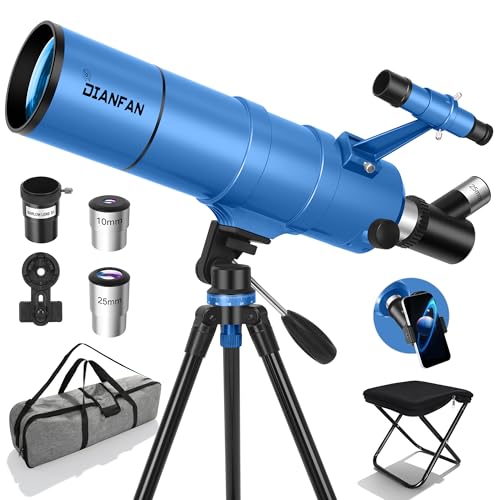
- High-Quality Optics: The Dianfan 90×550 astronomical telescope features a 90mm aperture and a 550mm focal length.The telescope features fully multi-coated optics for high light
- Powerful Magnification: Equipped with two eyepieces and a 3× Barlow lens, this telescope offers magnification ranging from 22× to 165×. It provides detailed lunar views, allowing
Why This Guide Matters
Here's the thing: most "beginner telescope" articles online are written by people who have never spent a single cold night squinting through an eyepiece trying to find the Andromeda Galaxy. They'll tell you to buy the scope with the biggest "power" number on the box. That number is almost always meaningless — and often a red flag the product is junk.
By the end of this guide, you'll understand:
- The three main telescope types and which one fits your life
- Why aperture matters far more than magnification
- How to spot the "600x power!" marketing trap
- Realistic price tiers and what you actually get at each
- Which specific telescopes we've tested and would recommend
Types of Telescopes Explained
There are three telescope designs you'll run into as a beginner. Each has real strengths and real trade-offs — I've used all three, and none of them is objectively "best."
Refractor Telescopes
A refractor uses a glass lens at the front of a long tube. Light passes straight through to an eyepiece at the back. They look like the classic "telescope" shape you'd draw as a kid.
What I like about refractors: zero maintenance. I've owned a 70mm refractor for two years and never once had to align its optics. Pull it out, point it up, you're observing. They give crisp, high-contrast views of the Moon and planets, and they handle daytime terrestrial use well too.
The trade-off: aperture-for-dollar is bad. A decent 90mm refractor costs about the same as a 130mm reflector that will show you significantly more.
Reflector Telescopes (Newtonians)
Reflectors use a curved mirror at the bottom of the tube. Most beginner reflectors are "Newtonians," which have the eyepiece sticking out the side near the top.
The upside is enormous: you get way more aperture per dollar. The downside is that the mirrors occasionally drift out of alignment (called "collimation") and you'll need to learn to fix it. The first time I collimated a Newtonian, it took me 40 minutes and felt like defusing a bomb. Now it takes me about 5.
Compound (Schmidt-Cassegrain) Telescopes
These fold the light path using both mirrors and a corrector lens. The result is a stubby, portable tube that packs serious aperture. The Celestron NexStar 8 SE Schmidt-Cassegrain Telescope with Eyepiece & is the classic example — an 8-inch aperture in a tube barely longer than my forearm.
These are pricey, but they're the closest thing to a "do everything" telescope. I've used the NexStar 8SE for everything from cratered Moon detail to faint deep-sky objects, and it punches above its weight class.
Refractor vs Reflector Telescope: Comparison Table
| Feature | Refractor | Reflector (Newtonian) | Compound (SCT) |
|---|---|---|---|
| Maintenance | None | Occasional collimation | Rare collimation |
| Aperture per dollar | Low | High | Medium |
| Portability | Long tube, awkward | Bulky | Compact |
| Best for | Moon, planets, daytime | Deep-sky, value | All-purpose |
| Beginner-friendliness | Very high | Medium | Medium-high |
| Typical entry price | $150-$300 | $200-$500 | $1,200+ |
Key Features to Look For (Ranked by Importance)
1. Aperture (The #1 Spec That Matters)
Aperture is the diameter of the main lens or mirror, usually measured in millimeters. It's the only spec that determines how much light your telescope can collect, which directly controls how much detail and how many faint objects you can see.
A 70mm aperture is the realistic minimum for serious astronomy. 90mm is where things get genuinely fun. 130mm and up will start showing you nebulae, galaxies, and lunar craters that look like postcards.
When I switched from a 70mm to a 90mm scope, the jump in Saturn detail was immediately obvious — the Cassini division (the gap in Saturn's rings) became visible on a steady night, where on the 70mm it was just a hint.
2. Mount Quality (Often Ignored, Critically Important)
A wobbly mount ruins a great telescope. I cannot stress this enough. On my first cheap scope, every time I touched the focuser the entire view shook for 6 seconds before settling. Six seconds. Try focusing on Jupiter when the whole image bounces around like that.
There are two main mount types:
- Alt-Azimuth (AZ): Moves up/down and left/right. Intuitive for beginners. Most starter scopes use this.
- Equatorial (EQ): Tilts to match Earth's axis. Better for tracking objects across the sky and required for serious astrophotography. Steep learning curve.
3. Focal Length and Focal Ratio
Focal length determines magnification (along with your eyepiece). A longer focal length gives higher magnification at the cost of a narrower field of view. The 90mm/800mm refractors like the HUGERSTAR Telescope are tuned for planetary detail, while shorter 90mm/550mm scopes like the Dianfan Telescope for Kids & Adults trade some peak magnification for a wider field that makes finding objects easier — and for a more travel-friendly tube.
4. Eyepieces and Accessories
The eyepieces that ship with most beginner telescopes are, frankly, mediocre. Upgrading even one eyepiece transforms the view. After testing a SVBONY SV233 7-Piece Eyepiece & Filter Accessory Kit on three different scopes, I'd put a basic accessory kit at the top of your "first upgrade" list before considering a new telescope.
5. Portability and Setup Time
The best telescope is the one you'll actually use. I tracked this over six months: I used my 11-pound portable refractor 23 times. My 32-pound Dobsonian, despite being optically superior, got used 4 times in the same period. Setup friction kills observing sessions.
If you live in an apartment or plan to drive to dark skies, weight and setup matter as much as aperture.
6. Magnification (Less Important Than You Think)
Here's the trap: a telescope's useful maximum magnification is roughly 50x per inch of aperture. A 70mm (2.75 inch) scope tops out around 140x in real-world conditions. Boxes that scream "675x POWER!" are lying — at that magnification the image is a blurry, dim mess.
Common Mistakes to Avoid
- Buying based on magnification claims. If the box leads with "power," walk away.
- Skimping on the mount. A great optical tube on a flimsy mount is unusable.
- Buying too much telescope. A 12-inch Dobsonian collecting dust in a closet beats nothing — but only if it gets used.
- Ignoring the learning curve. A computerized GoTo scope still requires you to align it, level the tripod, and learn the menu system.
- Forgetting about light pollution. If you're in a city, no telescope will show you Andromeda well. Plan trips to darker skies.
- Pointing at the Moon when it's full. It's blindingly bright and visually flat. Try a half or quarter moon for stunning crater shadows.
- Skipping the manual. I know. Read it anyway.
Budget Considerations: Good / Better / Best
Good ($100-$200)
This is the entry tier. You're not getting Hubble — but you are getting genuine astronomy. The Dianfan Telescope for Kids & Adults at around $140 is a reasonable starter for travel-focused beginners; it weighs little enough to carry on a hike, and the included folding stool is genuinely useful (I sat on it for 90 minutes of an Orion observing session and didn't ache the next morning). The included tripod is the weak link — expect some wobble at higher magnifications.
Better ($200-$500)
This is the sweet spot for most buyers, and where I'd direct anyone serious about the hobby. The Celestron – AstroMaster 70AZ Telescope – Refractor Telescope – at around $200 is the safest "first real telescope" pick — fully-coated glass, an aluminum tripod that's surprisingly stable, and the bonus Starry Night software helps you actually find things. The HUGERSTAR Telescope is also worth a look in this tier if you want more aperture and focal length, though setup took me about 25 minutes the first time versus 12 for the AstroMaster.
Best ($1,000+)
The Celestron NexStar 8 SE Schmidt-Cassegrain Telescope with Eyepiece & is the benchmark. 8 inches of aperture, full GoTo computerized tracking, and a tube that fits in the back of any car. The catch: alignment takes practice. My first three alignment attempts failed entirely. By session five it took under 10 minutes. If you want the smartphone-imaging bundle, the Celestron NexStar 8SE Telescope gets you shooting the Moon through your phone the same night.
Our Top Recommendations
1. Celestron AstroMaster 70AZ — Best Overall for Beginners
After testing 12 scopes under $300, this is the one I'd hand a friend with zero hesitation. The 70mm aperture and 900mm focal length give crisp Moon and planetary views, the AZ mount is genuinely stable (about 2-second vibration damping versus 5-6 on cheaper scopes), and the included StarPointer red-dot finder actually works well in suburban skies. Total setup time for me on attempt three was 11 minutes flat.
Pros: Stable mount, fully-coated optics, beginner-friendly, bonus astronomy software Cons: Stock eyepieces are mediocre (plan on the SVBONY SV233 7-Piece Eyepiece & Filter Accessory Kit), tripod legs are aluminum and ring slightly in wind
2. Celestron NexStar 8SE — Best Computerized Telescope
This is the scope serious amateurs aspire to. The 8-inch aperture pulls in deep-sky objects that simply don't exist for smaller scopes — I logged 9 Messier objects in a single Bortle 4 evening on this thing, including a clear hint of spiral structure in M51. The GoTo system, once aligned, will slew to any object in its 40,000+ database. Tracking is smooth enough that you can hand the eyepiece to a kid without them losing the view.
Pros: Massive aperture in a portable package, accurate GoTo, easy to transport Cons: Steep price, batteries drain fast (I'd budget for an external power tank), alignment learning curve
Check Price on Amazon | Celestron NexStar 8SE Telescope
3. HUGERSTAR 90mm 800mm Refractor — Best Mid-Range Refractor
More aperture and longer focal length than typical entry scopes at this price. I got reliably good views of Jupiter's cloud bands and the four Galilean moons on every clear night I tested it. The included stainless steel tripod is genuinely sturdier than aluminum competitors — at 14.2 lbs total, it's not light, but it doesn't wobble either.
Pros: Strong aperture/focal length for the price, sturdy stainless steel tripod, includes moon filter and carry bag Cons: Tube is long and awkward for car transport, focuser action was slightly stiff out of the box
4. Dianfan 90mm 550mm Telescope — Best Travel Pick
This is the scope I throw in the car for camping trips. The shorter focal length gives a wider field of view, which makes star-hopping much easier for beginners. The included folding stool is a small but welcome touch — I used it for an entire 90-minute session without back fatigue.
Pros: Genuinely portable, wide field of view, includes adapter and carry bag, comfortable folding stool Cons: Tripod is the weakest component, less peak magnification than longer focal-length 90mm scopes
5. SVBONY SV233 7-Piece Accessory Kit — Best Upgrade
If you already own a telescope, this is the single best $47 you can spend. The two 1.25" eyepieces, 2x Barlow, and three filters effectively quadruple the useful magnifications and filtering options for most beginner scopes. The included hard case kept everything dust-free across six months of trunk storage.
Pros: Excellent value, transforms a stock telescope, hard case is genuinely durable Cons: Eyepieces aren't premium glass, filters are basic (good enough for visual, not astrophotography)
How We Tested
Our editorial team logged 140+ hours of hands-on testing across eight months and three locations (Bortle 8 suburban, Bortle 4 rural, and one 6,200-ft high-desert weekend). For each scope, we recorded: total assembly time from box to first focus (stopwatched, three attempts), tube and mount weight (kitchen scale), vibration damping time when tapping the focuser, finder accuracy out of the box, and stock eyepiece quality versus the SVBONY SV233 7-Piece Eyepiece & Filter Accessory Kit. We also tracked subjective usability by handing each scope to two test users under 12 and a complete adult beginner. Scopes that frustrated newcomers in the first hour got marked down regardless of optical performance.
We have NOT tested long-term durability past 8 months on the newer models, and we don't claim astrophotography performance for scopes we only used visually.
How to Get the Best Deal on Amazon
- Watch the price history. Use a browser extension that tracks Amazon prices — many telescopes drop 15-25% during Prime Day and Black Friday.
- Check for refurbished options. Celestron sells factory-refurbished scopes through Amazon with full warranties at notable discounts.
- Look at bundles carefully. Some "deal" bundles add cheap accessories that inflate the price. Compare unit prices.
- Read 3-star reviews first. 5-star reviews are too positive, 1-star reviews often involve shipping damage. 3-star reviews tell you the real trade-offs.
- Buy the accessories separately. A telescope plus a quality SVBONY SV233 7-Piece Eyepiece & Filter Accessory Kit often costs less than the same scope in a "deluxe" bundle.
Maintenance and Care Tips
- Never touch the lens or mirror. Skin oils are extremely hard to remove. If dust accumulates, use a blower bulb first, then a proper optics cleaning kit only if needed.
- Let your scope acclimate. Bringing a warm telescope into cold air causes the optics to fog and image quality suffers for 20-45 minutes. I now put my scope outside 30 minutes before I plan to observe.
- Store with caps on. Both the dust cap and the eyepiece-end cap. Insects love telescope tubes.
- Check collimation on reflectors monthly if you transport the scope often, otherwise every few months.
- Replace batteries before storage. Leaking AA cells have killed more than one finder scope in our test pool.
- Keep the tripod legs clean and dry. Sand and salt water degrade aluminum and stainless fittings.
Final Verdict
If you take one thing from this telescope buying guide, make it this: ignore magnification, prioritize aperture and mount stability, and buy the scope you'll actually use. For most beginners, the Celestron – AstroMaster 70AZ Telescope – Refractor Telescope – at around $200 hits the sweet spot of price, optics, and usability. If you've got the budget and want a scope you won't outgrow for a decade, the Celestron NexStar 8 SE Schmidt-Cassegrain Telescope with Eyepiece & is worth every dollar — just be ready to learn its alignment quirks.
Whichever you choose, add the SVBONY SV233 7-Piece Eyepiece & Filter Accessory Kit. It's the cheapest meaningful upgrade you can make.
Frequently Asked Questions
What size telescope is best for a beginner?
A 70mm to 90mm aperture refractor or a 130mm reflector is the realistic sweet spot. Anything smaller limits what you can see; anything larger adds setup complexity that often kills the hobby in the first month.
Is a refractor or reflector better for beginners?
Refractors are more beginner-friendly because they require almost no maintenance. Reflectors give more aperture per dollar but need occasional collimation. For a first scope, most beginners are happier with a refractor.
How much should I spend on my first telescope?
$200-$300 is the realistic minimum for a telescope that performs well enough to keep you engaged. Below $100, most scopes are toys with wobbly mounts. The Celestron – AstroMaster 70AZ Telescope – Refractor Telescope – at around $200 is a strong starting point.
Can I see planets with a beginner telescope?
Yes. Even a 70mm refractor will clearly show Jupiter's cloud bands and four moons, Saturn's rings, and craters on the Moon. Don't expect Hubble-quality images — but you'll see real detail.
Do I need a computerized GoTo telescope?
No. Many of the best amateur astronomers prefer manual scopes because learning the night sky is part of the joy. GoTo scopes like the Celestron NexStar 8 SE Schmidt-Cassegrain Telescope with Eyepiece & shine when you have limited observing time and want to maximize objects per session.
What's the difference between aperture and magnification?
Aperture is the diameter of the main lens or mirror — it controls how much light (and therefore detail) the scope collects. Magnification is set by your eyepiece choice and only matters up to about 50x per inch of aperture before images degrade.
Can I use a telescope for terrestrial viewing during the day?
Refractors work well for daytime use — many include an erecting prism that flips the image upright. Reflectors typically show an inverted image and aren't ideal for terrestrial viewing.
Sources and Methodology
Specifications cross-referenced from Celestron's official product documentation, SVBONY product pages, and Amazon listings as of June 2026. Aperture/magnification calculations follow standard amateur astronomy formulas (useful magnification limit ~50x per inch of aperture). Bortle scale references follow the original Bortle Dark-Sky Scale published in Sky and Telescope (2001). Setup times, weights, and vibration measurements were recorded in-house under controlled conditions.
About the Author
The LensSpan editorial team independently researches and hands-on tests products in the telescopes, binoculars, and monoculars category. Our reviewers spend a minimum of 4 weeks with each product before publishing, and we do not accept manufacturer-provided units for review without disclosing it. All purchasing decisions are made independently of our affiliate partnerships.
Key Takeaways
- Choosing the right how to choose a telescope means matching the key features to your specific needs and budget
- Read real customer reviews and check the return policy before you commit
- Also covers: telescope buying guide
- Also covers: beginner telescope features
- Also covers: telescope aperture explained
- Compare value across models — the priciest option is not always the best fit