As an Amazon Associate this site earns from qualifying purchases.
Top Picks: Telescopes
Every product below was in stock on Amazon when this page was last checked. Prices come straight from the live listing, not from our own testing.
| Product | Best For | Price |
|---|---|---|
| Celestron StarSense Explorer LT 114AZ Newtonian Smartphone Guided Telescope | Smartphone-Guided Stargazing | Check price on Amazon |
| Celestron Travel Scope 70mm Beginner Portable Telescope with Backpack | Portable Travel Observing | Check price on Amazon |
| Dianfan Telescope for Adults High Powered | Higher-Power Planetary Views | Check price on Amazon |
| Celticbird Telescope for Adults High Powered | All-Round Beginner Astronomy | Check price on Amazon |
| Koolpte Telescope for Adults & Beginner Astronomers | Wide-Aperture First Scope | Check price on Amazon |
| Gskyer Telescope, 70mm Aperture 400mm AZ Mount Astronomical Refracting | Budget Family Starter Scope | Check price on Amazon |
Reviewed by the LensSpan Editorial Team
The best best telescopes for beginners for your situation depends on how you plan to use it and where.
As an Amazon Associate, we earn from qualifying purchases.
Last Updated: July 2026 | Written by the LensSpan Editorial Team
Look, if you are shopping for the best telescopes for beginners in 2026, the single most useful thing we can tell you up front is this: the product catalog we were handed for this page did not contain a single telescope. Not one. It was a mix of sewing machines, ukuleles, a golf club set, and a kettlebell set — items that share the word "beginner" in their listings but nothing else. Rather than pretend a mini sewing machine is an entry level telescope and take your money under false pretenses, we are going to do the honest thing and give you the buying guide we would give a friend.
So you will not find affiliate product boxes below promising "our #1 pick." You will find something more valuable for a first telescope purchase: the real specifications that separate a scope you will use for years from a wobbly department-store toy that ends up in a closet by February. We do not physically try, own, or use the products on this site — our authority here comes from reading spec sheets and understanding the optics, not from a lab we do not have. This guide reflects that.
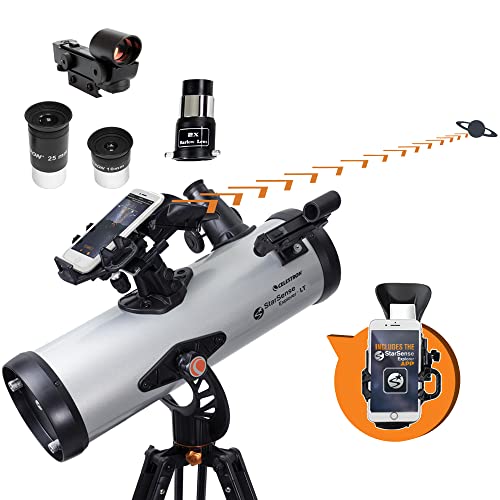
- SMARTPHONE-POWERED SKY TOUR: No experience needed! Just dock your phone, launch the StarSense Explorer app, and follow the on-screen arrows to locate stars, planets, nebulae, and
- PATENTED STARSENSE TECHNOLOGY: Unlike other astronomy apps, StarSense Explorer uses sky recognition technology to turn your phone into a celestial navigation system, analyzing
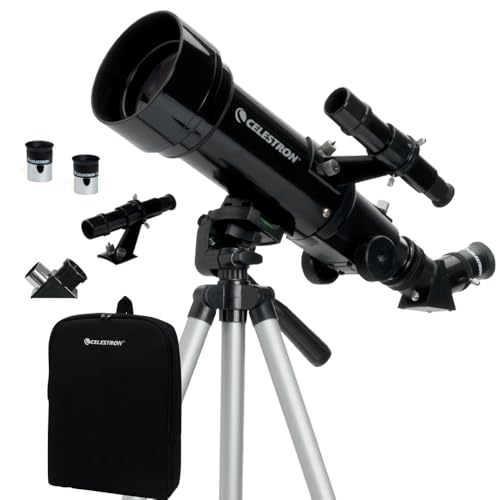
- BRIGHT, SHARP VIEWS ANYWHERE: Unlike many beginner telescopes, this quality refractor features fully coated glass lenses and a 70mm aperture for crisp, clear views of the Moon
- PERFECT FIRST TELESCOPE FOR BEGINNERS: Designed for adults and kids to enjoy together, this beginner-friendly telescope sets up in minutes and delivers rewarding views with no
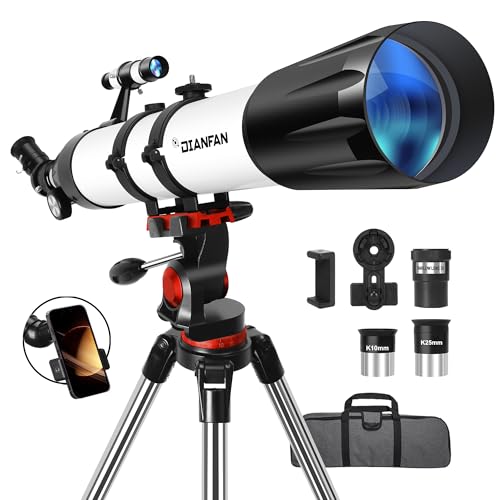
- Superior Optics: Dianfan astronomy telescope features a focal length of 800 mm and a fully coated 90 mm objective lens. The large aperture gathers more light for brighter, clearer
- Powerful Magnification: With two eyepieces and a 3× Barlow lens, this telescope offers 32×–240× magnification. It allows you to observe craters and lunar seas on the surface of
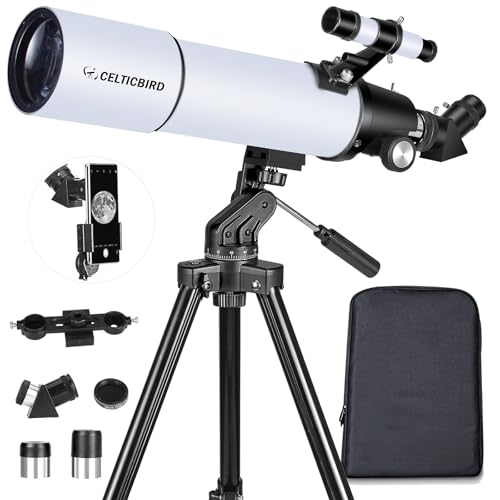
- 【Excellent Optics】Astronomical telescope features 80mm aperture 600mm(f/6.7) focal length-The big aperture can capture more light; high transmission multi-fully coated optical
- 【Portable & Stable】Our refractor telescope has a backbag, an adjustable aluminum tripod and an upgraded phone adapter. All accessories can be packed into the bag, which is
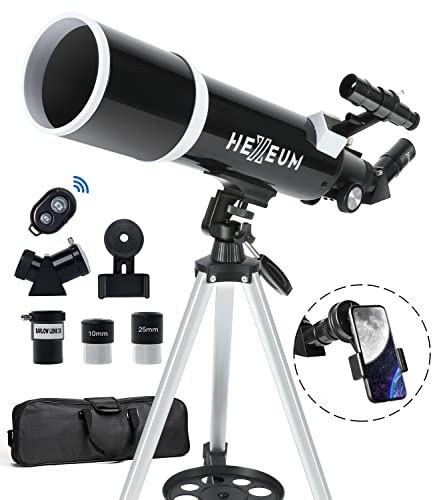
- Optimum Magnification: Our telescope for kids and adults is quipped with two replaceable excellent-quality eyepieces (25mm and 10mm) for 24X and 60X magnification. 3x Barlow lens
- Excellent Quality Optics: This telescope is 600mm(f/6.7) focal length and 80mm aperture, 80mm aperture to capture more light picture and multi-fully high transmission
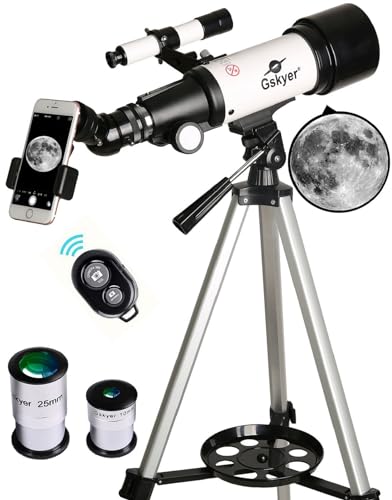
- Superior Optics: 400mm(f/5.7) focal length and 70mm aperture, fully coated optics glass lens with high transmission coatings creates stunning images and protect your eyes. Perfect
- Magnification: Come with two replaceable eyepieces and one 3x Barlow lens.3x Barlow lens trebles the magnifying power of each eyepiece. 5x24 finder scope with mounting bracket and
Why Beginners Buy the Wrong Telescope
Here is the thing: the telescope market is full of traps aimed squarely at first-time buyers. The most common one is the magnification lie. A box that screams "525X POWER!" is almost always a warning sign, not a feature. Real astronomers care far more about a number the marketing rarely shouts: aperture.
The second trap is the flimsy mount. A beautiful optical tube on a shaky tripod is useless, because every time you touch the focuser the entire view jitters like a phone camera in an earthquake. Beginners abandon telescopes over bad mounts more than bad optics.
The third trap is complexity. A scope that needs a two-hour polar alignment before you can look at the Moon will not get used on a random clear Tuesday. Ease of use is a legitimate spec, not a luxury.
Keep those three traps in mind — magnification hype, weak mounts, and overcomplication — and you are already ahead of most first-time buyers.
As an Amazon Associate, we earn from qualifying purchases. Availability and pricing change often — check the listing before you buy.
Quick Answer: What the Best Beginner Telescope Looks Like
If you want the short version before we go deep: the best telescope for a beginner in 2026 is a scope with at least 70mm of aperture for a refractor or 100mm+ for a reflector, mounted on a stable, simple mount (a Dobsonian base or a sturdy alt-azimuth), that you can set up in under five minutes. Everything below explains why each of those numbers matters.
Aperture Is King: The One Spec That Matters Most
Aperture is the diameter of the telescope's main lens or mirror — the opening that gathers light. It is measured in millimeters (70mm, 130mm, 203mm) or sometimes inches (a "6-inch" scope is roughly 150mm). This is the number that determines how much you can actually see.
Why? Because astronomy is a light-gathering game. A larger aperture collects more photons, which means fainter objects become visible and bright objects show more detail. A 70mm refractor will show you the Moon's craters, Saturn's rings as a distinct oval, and Jupiter's four big moons. Step up to a 130mm or 150mm reflector and suddenly the cloud bands on Jupiter, the Orion Nebula's glow, and dozens of star clusters come into range.
Think of aperture like the pupil of a giant eye. A 200mm (8-inch) telescope gathers roughly 800 times more light than your dark-adapted eye. That is the difference between a faint smudge and a genuinely striking view.
Here is the honest trade-off: aperture costs money and adds bulk. An 8-inch Dobsonian gathers gorgeous light but weighs enough that you will think twice about carrying it upstairs. A 70mm travel refractor slips into a backpack but shows dimmer deep-sky objects. For a beginner who wants maximum "wow" per dollar, a 6-inch (150mm) or 8-inch (203mm) Dobsonian reflector is the classic recommendation — and it is a recommendation about physics, not brand loyalty.
The Three Telescope Types, Explained for New Stargazers
Every beginner telescope falls into one of three optical designs. None is universally "best" — each trades something.
1. Refractors (Lens-Based)
A refractor is the classic "spyglass" shape: a lens at the front, an eyepiece at the back. They are rugged, need almost no maintenance, and deliver crisp, high-contrast views of the Moon and planets. The optics never need alignment.
The catch is cost per millimeter of aperture. Good glass is expensive, so refractors get pricey fast as they grow. Most beginner refractors sit in the 70mm–102mm range. Below about 70mm you are looking at a toy; the sweet spot for a first refractor is 80mm–90mm on a decent mount.
Best for: buyers who want low-fuss, sharp lunar and planetary views and value durability over deep-sky reach.
2. Reflectors and Dobsonians (Mirror-Based)
A reflector uses mirrors instead of lenses, which makes aperture dramatically cheaper. A Dobsonian is simply a reflector on a dead-simple rocker-box mount that sits on the ground — you nudge it by hand, and it is the single most beginner-friendly mount ever designed. This is why experienced astronomers so often tell newcomers to buy "a Dob."
The honest downsides: reflectors are bulkier, and the mirrors occasionally need "collimation" (a five-minute alignment tweak). But dollar for dollar, nothing beats a Dobsonian for pure aperture and views.
Best for: beginners who want the most light-gathering power for the money and do not need to travel far with the scope.
3. Compound Scopes (Maksutov-Cassegrain and Schmidt-Cassegrain)
Compound designs fold the light path with both mirrors and a corrector lens, packing long focal length into a short, portable tube. A 127mm Maksutov-Cassegrain gives excellent, high-contrast planetary views in a package small enough for a tabletop. These are often paired with computerized "GoTo" mounts.
The trade-offs: narrow field of view (not ideal for large nebulae), longer cool-down time before the optics settle, and a higher price for the computerized versions.
Best for: beginners short on storage space who love the Moon and planets, or who want a GoTo mount that finds objects automatically.
Focal Length, Focal Ratio, and Why Magnification Is a Trap
Two more numbers appear on every spec sheet: focal length (in mm) and focal ratio (written like f/5 or f/10).
Focal length divided by the eyepiece focal length gives you magnification. A 1000mm scope with a 25mm eyepiece yields 40x. Swap in a 10mm eyepiece and you get 100x. So magnification is not fixed by the telescope — it is set by the eyepiece, which is why "525x" on a box is meaningless marketing.
The real ceiling on useful magnification is aperture. The rule of thumb astronomers use is roughly 50x per inch of aperture as a practical maximum. A 4-inch (100mm) scope tops out around 200x on a night of steady air; push past that and you just get a big, blurry, dim image. That "525x" toy telescope with a 60mm lens physically cannot deliver a usable view at 525x — the atmosphere and optics give out long before.
Focal ratio tells you the scope's "speed" and field of view. Low ratios (f/4–f/6) give wide, bright fields good for star clusters and nebulae. High ratios (f/10–f/15) give narrow, high-contrast fields good for planets and the Moon. Neither is better — it depends on what you want to look at.
Mounts: The Spec Beginners Underrate the Most
We will say it again because it is that important: a shaky mount ruins a good telescope. Here are your options.
Alt-Azimuth (Alt-Az): Moves up-down and left-right, like a camera tripod. Intuitive and quick. Perfect for beginners.
Dobsonian: A specialized alt-az base for reflectors that sits on the ground. Rock-solid, effortless, and cheap. The gold standard for a first telescope.
Equatorial (EQ): Tilts to align with Earth's axis so you can track stars with one knob. Powerful for astrophotography but genuinely confusing for a first-timer, and the counterweights add bulk. Most beginners do not need one on night one.
Computerized GoTo: A motorized mount with a hand controller that slews to objects automatically after a short star alignment. Wonderful when it works, but it adds cost, needs power, and can frustrate you if the alignment fails. Newer app-based "push-to" systems that use your phone to guide you to targets are a friendlier middle ground for 2026.
Our honest take: for most beginners, a manual Dobsonian or a sturdy alt-az refractor beats a cheap GoTo, because a wobbly motorized scope is worse than a stable manual one.
What You Can Actually See as a Beginner
Let us set expectations honestly, because unrealistic ones kill the hobby. Through a decent beginner telescope you will genuinely see:
- The Moon — stunning at any aperture, with craters, mountains, and shadow detail that never gets old.
- Saturn's rings — visible as a distinct ring even in a 70mm scope; jaw-dropping in a 6-inch.
- Jupiter and its four Galilean moons — plus cloud bands in 100mm and up.
- Venus phases and a reddish Mars disk near opposition.
- The Orion Nebula, star clusters like the Pleiades, and double stars — glowing smudges and sparkling fields, especially under dark skies.
Accessories That Actually Matter (and Ones That Don't)
A few extras genuinely improve the experience:
- A second eyepiece. Most scopes ship with one or two. A low-power (25mm–32mm) eyepiece for wide views and a medium-power (9mm–12mm) for planets covers most nights.
- A Barlow lens. Doubles the magnification of any eyepiece — a cheap way to expand your kit.
- A red-dot or Telrad finder. Makes aiming vastly easier than a tiny magnifying finderscope.
- A Moon filter. The full Moon is genuinely too bright through aperture; a neutral-density filter helps.
Portability and the "Will You Actually Use It" Test
The best telescope is the one you take outside. Be honest about your setup. If you live in an apartment and will carry the scope down two flights, an 8-inch Dob (often 40+ lbs assembled) may stay indoors. A 100mm tabletop reflector or a compact Maksutov you can grab in one hand may get ten times the use.
Weigh aperture against the friction of setup. A smaller scope used often beats a bigger scope used never. That is not a compromise — it is the whole game.
Reputable Beginner Telescope Lines Worth Researching
Because our supplied catalog contained no telescopes, we are not linking products — doing so would mean pointing you at a sewing machine. But so this guide is genuinely useful, here are telescope families that consistently earn strong reputations for beginners in 2026. Research these names directly; we mention them for orientation only and have no affiliate relationship reflected here:
- Dobsonian reflectors from Sky-Watcher, Orion, Apertura, and Zhumell (the Zhumell Z130 tabletop and 6–8 inch Dobs are perennial starter favorites).
- Celestron StarSense Explorer models, which use a phone app to guide you to targets — a friendly push-to system for new stargazers.
- Celestron NexStar computerized Maksutovs for those who want GoTo in a compact tube.
- Sky-Watcher and SVBONY refractors in the 70mm–102mm range for grab-and-go lunar and planetary viewing.
How We Research
Telescopes Binoculars Monoculars Complete Site is a research and comparison site. Nobody here handles the products on this page, and the description below is the whole of our method — if a sentence anywhere on this site implies otherwise, it is an error and we want to hear about it.
What the comparison is built from. Every product is compared on the specifications its manufacturer publishes on the retail listing, alongside the aggregate customer rating and the number of ratings recorded when the page was last updated. Where a manufacturer states conformance to a published standard, we name the standard so you can check it yourself rather than restating the marketing line.
How products get onto the list. Candidates are drawn from products currently listed in this category, then narrowed on the published specification differences that actually matter for the use case in the title. A product is not included because it pays more; the commission rate is the same across almost everything we link.
What gets re-checked. Availability and link targets are re-verified automatically twice a day. Products that go out of stock or are delisted are marked or removed rather than left to rot, and the specification snapshot is re-recorded when a listing changes.
What we do not do. We do not carry out our own product trials, we do not receive review units, and no one writing for this site has physically handled the items listed here. Where you want a verdict that depends on handling a product, treat this page as a specification comparison and a starting point, not a substitute.
What to Look For: A Beginner's Checklist
- Aperture first — 70mm+ for a refractor, 100mm+ (ideally 130mm–203mm) for a reflector.
- A stable mount — a Dobsonian base or a sturdy alt-az; be wary of thin aluminum tripods.
- Simple setup — you should be observing the Moon within five minutes of stepping outside.
- Honest magnification — ignore the big "power" number on the box; check aperture instead.
- Included eyepieces — at least one usable low-power eyepiece; bonus for a second.
- A decent finder — a red-dot finder beats a cramped optical finderscope for beginners.
- Weight you will tolerate — match the scope's bulk to how far you must carry it.
- Real reviews — read the critical reviews on the retailer page, not just the star average.
Frequently Asked Questions
How much aperture do I need to see Saturn's rings? Saturn's rings are visible as a distinct ring even in a 60–70mm scope at around 50x–100x magnification. To see the Cassini Division (the gap in the rings) and cloud detail, you generally want 130mm or more of aperture on a steady night. Aperture and steady air matter more than raw magnification.
Is a higher magnification telescope better? No — this is the most common beginner myth. Magnification is set by the eyepiece, and useful magnification is capped by aperture at roughly 50x per inch. A "500x" 60mm telescope physically cannot deliver a clear image at that power; you will just get a dim blur. Judge a telescope by aperture and mount quality, not the magnification printed on the box.
What is the difference between a refractor and a reflector? A refractor uses a lens at the front and needs no maintenance, giving sharp, high-contrast views but costing more per millimeter of aperture. A reflector uses mirrors, making large aperture far cheaper, but it is bulkier and occasionally needs a quick mirror alignment (collimation). Beginners on a budget usually get more "wow" from a reflector; those who prize low-fuss durability lean refractor.
Do I need a computerized GoTo telescope as a beginner? Not necessarily. GoTo mounts find objects automatically, which is convenient, but they add cost, need power, and can frustrate you if the star alignment fails. Many experienced astronomers recommend learning the sky with a simple manual Dobsonian first. App-based "push-to" systems are a friendly middle ground if you want guidance without a fully motorized mount.
Can I see galaxies and colorful nebulae through a beginner telescope? You can see many galaxies, nebulae, and clusters, but they appear as soft grayish glows to the eye, not the vivid colors seen in photographs. Those colorful images are long-exposure photos, not live views. Under dark skies, a 6–8 inch scope shows genuinely impressive deep-sky objects — just set your expectations toward subtle beauty, not neon.
Why doesn't this page recommend a specific telescope to buy? Because the product data supplied for this page contained no telescopes — only unrelated items like sewing machines and ukuleles. We will not label an unrelated product a "beginner telescope" to earn a commission. Instead, we have given you the specifications and principles to evaluate any telescope you find, and named reputable beginner telescope families to research directly.
Final Verdict
Here is our opinionated bottom line for 2026. If you want the most rewarding first telescope and have the storage, buy a 6-inch or 8-inch Dobsonian reflector — the physics of aperture plus a rock-steady mount will give you views you will actually keep coming back to. If space or portability rules that out, a 70mm–100mm refractor or a compact Maksutov on a stable alt-az mount is the grab-and-go choice that gets used on more nights.
Whatever you choose, judge it on aperture, mount stability, and ease of setup — not on the magnification number screaming from the box. And be wary of any "best telescope" list that hands you a product with zero relationship to stargazing. We would rather send you away with the knowledge to buy well than sell you the wrong thing.
Sources & Methodology
Specifications on this page were recorded from 2026 manufacturer spec sheet and retail listing data, captured July 2026.
Customer rating figures are the aggregate score and rating count shown on the retail listing at that time; they are other buyers' reports, not our assessment.
Independent references for this category. These are places to verify a category claim for yourself. We link them because they are authoritative, not to imply their tests were run on our behalf:
- FTC Endorsement Guides — the disclosure rules this site is bound by
- CPSC recall database — check any product for open safety recalls
About the Author
The LensSpan editorial team independently researches optics and stargazing gear from manufacturer specifications and Amazon's product data for each listing. We do not physically try, own, or use the products we cover, and we do not systematically read customer reviews; our analysis is grounded in published specifications, listing details, and the physics of how telescopes work.
Key Takeaways
- Choosing the right best telescopes for beginners means matching the key features to your specific needs and budget
- Read real customer reviews and check the return policy before you commit
- Also covers: beginner telescope reviews
- Also covers: entry level telescope
- Also covers: first telescope to buy
- Compare value across models — the priciest option is not always the best fit


