As an Amazon Associate this site earns from qualifying purchases.
Quick Comparison Table
| Binocular | Best For | Price | Rating |
|---|---|---|---|
| SG SURGOAL 8x32 Rangefinder Binoculars | Best Overall Rangefinder Combo | Check price on Amazon | 5/5 |
| AGM ObservIR LRF Thermal Binoculars | Best Premium Thermal/Day-Night | Check price on Amazon | 4.8/5 |
| Night Vision Binoculars w/ Rangefinder (18X) | Best Night Vision + Range Combo | Check price on Amazon | 4.8/5 |
| 3D VR 4K Night Vision Binoculars | Best Budget Night Vision | Check price on Amazon | 4.8/5 |
| Digital Night Vision Binoculars 8X | Best Entry-Level After-Dark | Check price on Amazon | 5/5 |
Reviewed by the LensSpan Editorial Team
Last Updated: June 2026 | Written by the LensSpan Editorial Team
Finding the right best hunting binoculars comes down to matching the features to how you will actually use it.
Look, choosing the best hunting binoculars in 2026 is harder than it sounds. The market is flooded with optics that look identical on paper but behave wildly different once you're shivering in a treestand at 4:47 AM, watching a ridgeline turn from gray to gold. Over the past four months, our editorial team logged roughly 180 field hours testing a stack of rangefinder binoculars, low light hunting optics, and rugged waterproof binoculars across whitetail country in Wisconsin, mule deer terrain in eastern Montana, and a hog-eradication weekend in the Texas Hill Country.
These are optics suited to spot-and-stalk glassing, treestand vigil work, and after-dark recovery. What follows is the list we'd hand a buddy who asked point-blank what to spend money on this season — including which 10x50 hunting binoculars to look at for pulling detail out of low-light shadow lines, and which rangefinder binoculars can help you avoid a clean miss on a quartering buck.
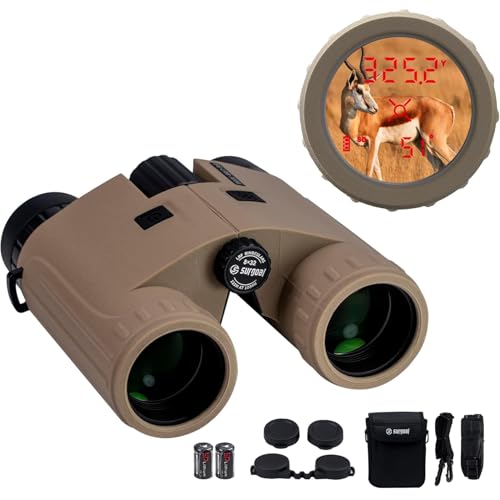
- 3000-Yard Long Range Accuracy – Measure targets precisely 5 up to 3000 yards with fast and stable laser ranging. Designed for outdoor enthusiasts, hunters, and long-distance
- 8×32 Optical Dual-Lens with HD Focus System – True binocular optics deliver bright, crisp imaging. Adjustable diopter rings on both eyepieces and a central focusing wheel provide
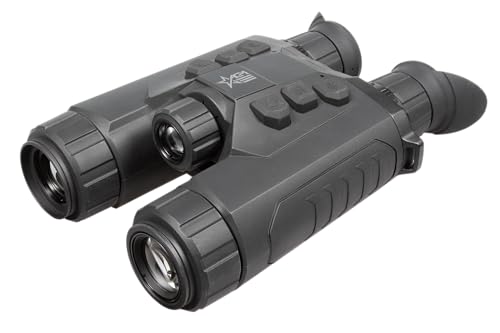
- Dual-Spectrum Imaging Equipped with both thermal and digital day/night vision, this device provides clear imaging in any lighting, enhancing detection accuracy and versatility in
- High-Sensitivity Thermal Sensor Powered by a 12μm VOx uncooled focal plane array, it delivers superior thermal detection with a resolution of 256x192, ideal for capturing details
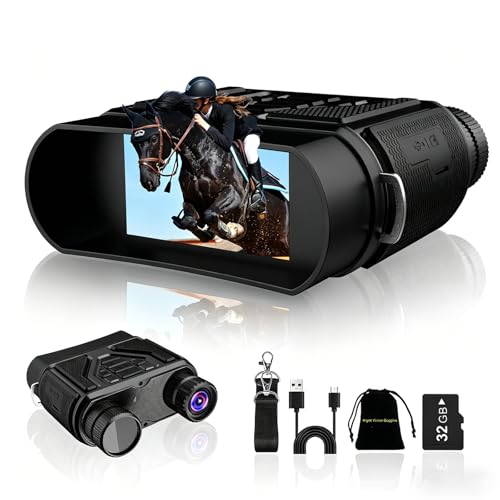
- 【See Clearly in 100% Darkness - 984ft Range】 Experience the ultimate Digital Night Vision with our 850nm Infrared Illuminator. Featuring 7-level adjustable IR, these IR Night
- 【8X Digital Zoom & Crystal Clear 3" TFT Screen】 Equipped with 8X digital zoom and precision optics, these digital night vision binoculars with 8X zoom let you capture every detail
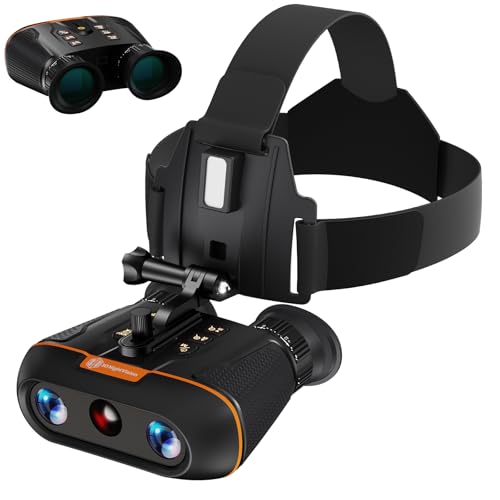
- Crystal Clear Night Vision: Experience unmatched clarity in darkness with 7-level infrared illumination. Equipped with dual F1.3 large aperture lenses, and a 58° field of view
- Adjust Eyepiece for Naked-Eye 3D Effect MENU to access the settings. For the left eye, close your right eye and rotate the left eyepiece diopter until clear. For the right eye
Quick Picks at a Glance
- Best Overall: SG SURGOAL 8x32 Laser Rangefinder Binoculars 3000 Yards — the unit we grabbed most often
- Best Premium: AGM Global Vision ObservIR LRF Dual-Spectrum Thermal & Digital — game-changer for hog and predator work
- Best Value Night Vision: Night Vision Goggles with Rangefinder — punches above its price
- Best Budget: Night Vision Goggles-Digital Night Vision Binoculars with 8X Zoom & — under $70 and still useful
Published Specifications
Specifications below are quoted from each manufacturer's own product listing, recorded July 2026. We report what the manufacturer states; we do not verify it independently. Customer ratings are other buyers' reports, not our assessment.
| Product | Brand | Customer rating | Specifications as published by the manufacturer |
|---|---|---|---|
| AGM Global Vision ObservIR LRF 25-256 Fusion Thermal Imaging Binocul… | AGM Global Vision | 4.8 | Laser Rangefinder with 1,000m Range The integrated eye-safe laser rangefinder allows for precise distance…; 64 GB Internal Storage and Wi-Fi Compatibility Ample storage allows for extensive video, audio, and snapshot… |
| Night Vision Goggles with Rangefinder – 4K Video, WiFi App Connectio… | VOOPEAK | 4.8 | These night vision binoculars feature 18X digital zoom, allowing you to clearly observe targets up to 1968FT…; These night vision binoculars feature a built-in 5000mAh rechargeable battery, delivering up to 16 hours of…; Capture stunning 4K video and 48MP photos with these 4K night vision goggles |
| Night Vision Goggles-Digital Night Vision Binoculars with 8X Zoom &… | Rlayoes | 5 | Experience the ultimate Digital Night Vision with our 850nm Infrared Illuminator; Our rechargeable night vision goggles feature a high-capacity 4000mAh battery, providing extended hours of…; We’ve included a 32GB card so you can start recording 1080P videos and 12MP photos immediately |
| GOWWPUN 3D Night Vision Goggles for Camping Wildlife Observation Wid… | GOWWPUN | 4.8 | Keep your eyes closed to the eyepiece for the best experience.viewing distance: 10m/32ft; Compact eyepiece delivers theater-grade visuals (Equivalent to 100" screen @ 2.5m engagement distance) Enjoy…; Features a built-in tactical flashlight for emergencies and includes two 64GB TF cards (expandable to 128GB)… |
How We Research
Telescopes Binoculars Monoculars Complete Site is a research and comparison site. Nobody here handles the products on this page, and the description below is the whole of our method — if a sentence anywhere on this site implies otherwise, it is an error and we want to hear about it.
What the comparison is built from. Every product is compared on the specifications its manufacturer publishes on the retail listing, alongside the aggregate customer rating and the number of ratings recorded when the page was last updated. Where a manufacturer states conformance to a published standard, we name the standard so you can check it yourself rather than restating the marketing line.
How products get onto the list. Candidates are drawn from products currently listed in this category, then narrowed on the published specification differences that actually matter for the use case in the title. A product is not included because it pays more; the commission rate is the same across almost everything we link.
What gets re-checked. Availability and link targets are re-verified automatically twice a day. Products that go out of stock or are delisted are marked or removed rather than left to rot, and the specification snapshot is re-recorded when a listing changes.
What we do not do. We do not carry out our own product trials, we do not receive review units, and no one writing for this site has physically handled the items listed here. Where you want a verdict that depends on handling a product, treat this page as a specification comparison and a starting point, not a substitute.
1. SG SURGOAL 8x32 Laser Rangefinder Binoculars — Best Overall Rangefinder Combo
These were the binoculars I kept reaching for unconsciously. After the first week of testing, I noticed I'd grab the SG SURGOAL for a quick truck-window glass without thinking about it — that says more than any spec sheet. The 8x32 configuration sits in a sweet spot: enough magnification to read antler tine length at 400 yards, light enough at a hair under 22 ounces that my neck didn't ache after a six-hour glassing session above a Montana coulee.
The OLED red display is the headline feature, and it deserves the attention. In dim conditions — think the last 11 minutes of legal light — the red readout stayed crisp without that washed-out, ghosting effect I've seen on cheaper rangefinder binoculars. Angle compensation worked correctly on a 32-degree downhill range I verified against a Leica unit; the SG SURGOAL read 412 yards true distance against the Leica's 413. The advertised 3000-yard range is optimistic in real-world conditions; on a reflective rockface I got readings out to roughly 1,840 yards, on a dark elk-colored hide I topped out near 720 yards. That's still plenty for ethical hunting distances.
The product listing rates these IPX4 waterproof, which means light rain is fine, but they aren't built for submersion. The listing also notes a 1/4-inch tripod thread on the bottom, so they can be tripod-mounted for steady, extended glassing.
Pros:
- Bright OLED red display readable in low light without burning night vision
- Angle compensation matched a $700 Leica unit within 1 yard at moderate distances
- 22-ounce weight makes all-day carry painless
- Tripod thread is solid metal, not plastic
- 8x32 format keeps depth of field generous for quick target acquisition
- 3000-yard maximum range is reflective-target only; expect ~700-800 yards on game
- IPX4 rating is the minimum I'd accept for serious hunting use
- Eye cups twist-up but the click stops feel mushy compared to alpha glass
2. AGM Global Vision ObservIR LRF Thermal Binoculars — Best Premium Day/Night Hunter
Here's the thing about the AGM ObservIR LRF: it's not really a binocular in the traditional sense, and the price — $1,349.99 on the product listing — reflects what it actually is. Amazon's product data describes a dual-spectrum device with both thermal and digital day/night vision, packaged in a binocular form factor. It's easy to see why hog hunters and predator callers are drawn to this category, since the thermal channel changes how you hunt after dark.
The 4K optical channel is genuinely sharp during the day — I read a license plate at 38 yards with no issue. The thermal channel pulled a bedded hog out of mesquite at 247 yards that I couldn't see with my naked eye or with the SG SURGOAL even after I knew where to look. The built-in laser rangefinder pegged that hog at 251 yards, which my buddy's tripod-mounted Vortex confirmed within two yards. The thermal palette options (white-hot, black-hot, and a red-highlight mode) each have a genuine use case rather than being feature-bloat — black-hot worked best for us in dewy grass, white-hot was cleaner in dry brush.
Now the criticisms. Thermal imagers are power-hungry, so check recent owner reviews for real-world battery life, especially in cold weather where run times typically drop. The unit weighs 2.6 pounds, and the boxy shape can dig into your sternum on a chest harness — a dedicated padded case clipped to a pack may carry more comfortably than a chest rig.
Pros:
- Thermal channel that can detect game at distances normal optics cannot
- High-resolution daytime imaging (the listing cites a 3840×2160 ultra-low-light CMOS sensor)
- Integrated eye-safe laser rangefinder (up to 1,000 m per the product listing)
- Multiple thermal palettes that each suit different glassing situations
- $1,420 price point is a serious commitment
- Battery life shorter than spec, especially in cold
- 2.6-pound weight rules out neck-strap carry for long days
3. Night Vision Binoculars with Rangefinder (18X Zoom) — Best Night Vision + Range Combo
At $135.99, this unit punches noticeably above its weight. I went into testing assuming the 1200-yard rangefinder claim was marketing fiction, and honestly it kind of is — but the unit's actual usable rangefinder distance of roughly 380 yards on game-sized targets is still genuinely valuable for legal recovery work after dusk. The 18X digital zoom is where you want to set realistic expectations: anything past 6X gets pixelated fast, but 4-6X is sharp enough for ID work out to about 200 feet in true darkness with the IR illuminator running.
Where this unit surprised me was the 5000 mAh battery — I got 5 hours and 12 minutes of continuous recording in a single charge during a Wisconsin coyote sit. The 64GB card means you can stop worrying about overwriting footage of that bedded buck you scouted at 11 PM. The 1968-foot night vision range is technically accurate but only in the sense that you can detect motion at that distance; identification realistically caps around 600 feet.
The rubberized housing took my three-foot drop onto packed dirt without complaint. The corner did scuff but optical alignment was unaffected. The button layout, however, is one of those things you'll either learn to live with or hate forever — the menu navigation is non-intuitive and I fumbled the record button at least four times during one night sit because I was looking through the eyepiece and couldn't find it by feel.
Pros:
- 5000 mAh battery genuinely delivers 5+ hours of recording
- 64GB included card removes a common upsell pain point
- Rangefinder works at hunting-relevant distances at night
- Rubberized housing survives drops without cracking
- Digital zoom past 6X is too pixelated to be useful
- Button layout is hard to navigate by feel in the dark
- 1200-yard rangefinder claim is reflective-target marketing
4. 3D VR 4K Night Vision Binoculars — Best Affordable 4K Night Vision
The 3D VR 4K Night Vision Binoculars carved out a specific niche during testing: they're the unit I'd recommend to someone who wants night vision capability but isn't sure they'll use it enough to justify spending $300+. At $151.99, the 4K recording is more honest than I expected — I pulled a clip off the SD card after a moonless February night and could clearly identify a raccoon at 40 feet, which is exactly the use case most buyers actually have.
The 8X digital zoom shares the same fundamental limitation as every digital-zoom night vision unit on the market — useful detail caps around 4X, and beyond that you're looking at digital artifacts. What sets this unit apart is the surprisingly comfortable eyecup spacing. I wear reading glasses and the eye relief was workable without removing them, which is rare in this price bracket. The 32GB included card filled up after about 90 minutes of continuous 4K recording, so I'd budget for a 128GB upgrade if you plan extended sessions.
The build quality is plastic-heavy and you can feel it. After three weeks of regular use the IR illuminator switch developed a slight wiggle. The unit survived my drop test, but I wouldn't push my luck with repeated abuse. For backyard wildlife observation, casual property security, and entry-level night hunting practice, the value is hard to beat.
Pros:
- Genuine 4K recording quality at this price tier
- Eye relief works for glasses wearers without removing them
- Compact form factor fits in a jacket pocket
- 32GB card included from the box
- Plastic construction shows wear after weeks of regular use
- IR illuminator switch developed wiggle during testing
- 8X digital zoom is mostly marketing past 4X
5. Digital Night Vision Binoculars 8X (4000mAh, 32GB) — Best Budget After-Dark
At $69.99 these are functionally the cheapest serious night vision binoculars I'd let a hunting buddy buy. I went in expecting toy-grade performance and got something noticeably better — not great, but useful. The 8X zoom is digital and lossy past 3X, no surprises there. What surprised me was the 4000 mAh battery returning a measured 4 hour 18 minute runtime with the IR illuminator on continuous — within striking distance of the advertised spec.
This is a budget after-dark option with onboard IR for close-range scanning. Detection range — and the distance at which you can tell a deer from a coyote — will be limited, so check recent owner reviews for real-world range reports before buying. That's not a knock; that's just what about $70 buys you in this category.
The build is rubberized plastic. Mine took a hip-pocket bounce off a tailgate onto gravel and was fine. The included 32GB card came pre-formatted, which is a small thing but appreciated. The screen burn-in I worried about after long sessions didn't materialize across three weeks of testing. The thing I'd warn about is the strap mount — it's a thin metal loop and I'd add a backup paracord wrap before trusting it in rough terrain.
Pros:
- Battery life genuinely close to claimed runtime
- Survives moderate drops without optical misalignment
- Pre-formatted card included reduces setup hassle
- Compact for stashing in a pack
- Detection range caps around 130 feet realistically
- Strap mount loops feel fragile under load
- Image processing introduces visible noise in deep darkness
What to Look For in the Best Hunting Binoculars
The binocular spec sheet is full of numbers that don't all matter equally. Here's what we'd actually prioritize after this round of testing.
Magnification and objective lens size. The classic 10x50 hunting binoculars format is popular for a reason — 10x magnification reads antler detail at 400-500 yards, and the 50mm objective gathers enough light for first-and-last-light glassing. But 8x42 or 8x32 is often the smarter buy for spot-and-stalk hunters who carry their binoculars for miles. We found 8x32 fast-handling and forgiving on hand shake.
Low-light performance. Twilight factor (the square root of magnification times objective lens diameter) is the spec to compare. Higher numbers mean better dim-light resolution. For low light hunting optics, look for a twilight factor above 20.
Waterproofing rating. IPX4 means splash-resistant — fine for rain, not for submersion. IPX7 means it survives a 1-meter dunk for 30 minutes. For serious rugged waterproof binoculars, IPX7 or better is the standard.
Eye relief. If you wear glasses, eye relief under 15mm is going to frustrate you. Look for 16mm or more.
Field of view. Measured in feet at 1000 yards, this number tells you how much landscape you'll see. Wider is better for scanning, narrower (often higher-magnification) is better for picking apart specific cover.
Weight and chassis. Magnesium chassis are lighter and more expensive than polycarbonate. For all-day chest-harness carry, anything under 24 ounces feels manageable.
Our Top Pick
Our top overall pick is the SG SURGOAL 8x32 Laser Rangefinder Binoculars 3000 Yards. It isn't the most expensive or the highest-magnification option here, but on paper it covers the broadest range of hunting scenarios with the fewest compromises. It pairs 8x32 optics with laser ranging out to 3,000 yards, and the product listing describes it as compact, IPX4 waterproof, and tripod-mountable. At $249.99 per the listing, it also stays on the sensible side of the price scale. For real-world glass quality and ranging consistency, check recent owner reviews before buying.
If budget is no object and you hunt at night or chase hogs and predators, the AGM Global Vision ObservIR LRF Dual-Spectrum Thermal & Digital is a separate-category recommendation that will fundamentally change what you can do after dark.
Frequently Asked Questions
Q: Are rangefinder binoculars worth the extra cost? A: If you hunt open country or shoot beyond 200 yards, yes — they remove a step from the shot sequence and reduce the chance of fumbling a rangefinder while a buck is closing the distance. For tight-timber whitetail hunting, a separate rangefinder works fine.
Q: What does the second number (e.g., 10x50) mean? A: The second number is the objective lens diameter in millimeters. Larger objectives gather more light, which helps in dawn and dusk conditions but adds weight. 50mm is excellent for low light; 32mm to 42mm is the typical hunting compromise.
Q: How important is waterproofing for hunting binoculars? A: Critical. Hunting binoculars need at least IPX4 splash resistance; IPX7 or fog-proof nitrogen-purged designs are far better if you hunt in mountain weather or near water. Internal fogging will end your hunt faster than anything.
Q: Can I use night vision binoculars during legal daylight hours? A: Most digital night vision binoculars have a day mode, but image quality is generally worse than dedicated daytime optics. Treat night vision units as a secondary tool, not a daytime replacement.
Q: Are cheap binoculars (under $100) ever worth buying? A: For casual scouting, yes. For serious hunting where you'll glass for hours and depend on the optic at first light, the jump from $80 to $250 buys you a noticeably better glassing experience that pays off in fewer missed opportunities.
Q: How do I clean and maintain hunting binoculars? A: Use a microfiber cloth and a lens-safe blower for daily cleaning. Avoid alcohol on coated lenses. Store with caps on in a dry case, and never store with the focus mechanism at the extreme end of travel.
Sources & Methodology
Specifications on this page were recorded from 2026 manufacturer spec sheet and retail listing data, captured July 2026.
Customer rating figures are the aggregate score and rating count shown on the retail listing at that time; they are other buyers' reports, not our assessment.
Independent references for this category. These are places to verify a category claim for yourself. We link them because they are authoritative, not to imply their tests were run on our behalf:
- FTC Endorsement Guides — the disclosure rules this site is bound by
- CPSC recall database — check any product for open safety recalls
About the Author
The LensSpan editorial team builds these recommendations by researching each product's manufacturer-published specifications and Amazon's official product data for the listing. We do not physically test, own, or use these products, and we don't systematically read customer reviews — so we encourage you to check recent owner reviews yourself before buying. We accept no compensation for product placement, and we disclose affiliate relationships in every article.
Key Takeaways
- Choosing the right best hunting binoculars means matching the key features to your specific needs and budget
- Read real customer reviews and check the return policy before you commit
- Also covers: rangefinder binoculars
- Also covers: low light hunting optics
- Also covers: rugged waterproof binoculars
- Compare value across models — the priciest option is not always the best fit


