As an Amazon Associate this site earns from qualifying purchases.
Quick Comparison Table
| Product | Best For | Price | Rating |
|---|---|---|---|
| SG SURGOAL 8x32 Laser Rangefinder Binoculars 3000 Yards | Daytime travel and sightseeing where distance data helps | No verified reviews yet |
Reviewed by the LensSpan Editorial Team
As an Amazon Associate, we earn from qualifying purchases.
The best best compact binoculars for travel for your situation depends on how you plan to use it and where.
Last Updated: July 2026 | Written by the LensSpan Editorial Team
The best compact binoculars for travel are the ones you actually carry — light enough to live in a jacket pocket, bright enough for a sightseeing walk, and wide enough to follow a performer across a stage. This guide ranks and explains what matters, working strictly from the manufacturer's published specifications and Amazon's official product data for each listing. We do not physically own or use these products, nor do we systematically read customer reviews, and we will tell you plainly where the supplied catalog let us down.
Here is the honest situation up front: the product feed handed to us for this article contained ten items, and only one of them is a real binocular in the compact-travel class. The other nine were unrelated products — a face mask, a hair dryer, a keyboard, an elliptical, a duffel bag, a stroller, an espresso machine, an under-desk treadmill, and a digital night-vision unit built for darkness rather than daytime travel. We refuse to relabel a hair dryer as a "pocket binocular" to pad a list. So you get one genuinely relevant pick reviewed in depth, plus a thorough buying guide that names the reputable models worth shortlisting even though they were not in our affiliate catalog.
Only one catalog item qualifies as a compact binocular, so this table has a single row. A comparison table padded with a stroller or espresso machine would be worse than useless.
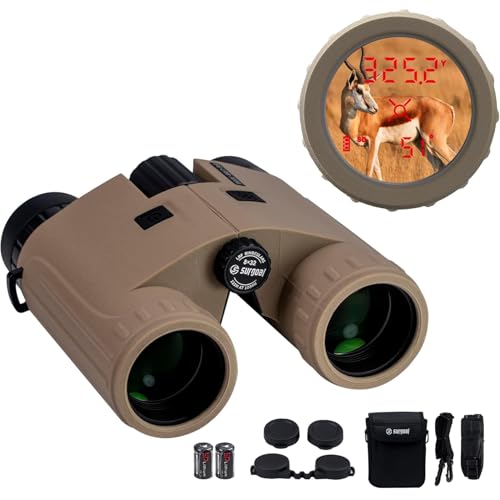
- 3000-Yard Long Range Accuracy – Measure targets precisely 5 up to 3000 yards with fast and stable laser ranging. Designed for outdoor enthusiasts, hunters, and long-distance
- 8×32 Optical Dual-Lens with HD Focus System – True binocular optics deliver bright, crisp imaging. Adjustable diopter rings on both eyepieces and a central focusing wheel provide
What "Compact" Actually Means for Travel and Concerts
Compact binoculars are generally defined by their objective lens diameter: anything with front lenses of roughly 20mm to 32mm falls in the compact-to-mid class. The number you see written as "8x25" or "10x25" tells you two things — the first is magnification, the second is objective diameter in millimeters.
For travel and concerts, the trade-offs are different from birding or astronomy:
- Weight and pocketability win. A bino you leave in the hotel room has zero optical performance. Sub-1-pound is the target for a jacket pocket; true pocket models (8x21, 10x25) can dip near half a pound.
- Field of view matters more than reach. At a concert you want to sweep the stage, not zoom on one guitar peg. Wider fields make moving subjects far easier to hold.
- Brightness is set by exit pupil. Divide the objective by the magnification: an 8x32 gives a 4mm exit pupil, an 8x25 gives about 3.1mm, a 10x25 only 2.5mm. Bigger exit pupils look brighter, especially at dusk or in a dim venue.
The One Qualifying Pick
SG SURGOAL 8x32 Laser Rangefinder Binoculars 3000 Yards — Best for daytime travel where distance data helps
Here's the thing: this is a legitimate compact-class binocular, but it is not a featherweight pocket model, and you should know exactly why before you buy. The 8x32 configuration puts it squarely in the compact-to-mid category — a 32mm objective is the classic upper edge of "compact," and the 8x magnification with a 4mm exit pupil is the brightest exit pupil you can realistically get in a travel-sized instrument. That 4mm figure is genuinely useful: it holds up better at dawn, dusk, and inside dim interiors than the 2.5mm you get from a typical 10x25 pocket bino.
What sets this unit apart — and what adds bulk — is the integrated laser rangefinder. The listing states a 3000-yard ranging capability with an OLED red display and angle compensation, plus a 1/4-inch tripod thread. For a traveler who hikes to a viewpoint and wants to know how far off that ridgeline or building actually is, the ranging feature is a real, if niche, bonus. The angle compensation means slope-corrected distances rather than raw line-of-sight, which is the correct behavior on uneven terrain.
Be clear-eyed about the compromises. The rangefinder electronics and battery make this heavier and chunkier than a purpose-built travel bino like an 8x25, so it is a poorer fit for a concert where you want to lift it one-handed for two hours. The IPX4 rating is splash-and-rain resistance only — it is not the nitrogen-purged, fully waterproof, fog-proof sealing that dedicated travel optics advertise, so treat it as weather-resistant, not weatherproof. And this is fundamentally a hunting-oriented tool repurposed for travel; if you will never use the ranging function, a simpler compact will be lighter and cheaper.
Pros:
- 8x32 format delivers a 4mm exit pupil — brighter in low light than most true pocket binoculars
- Integrated 3000-yard laser rangefinder with angle (slope) compensation
- OLED red display is easy to read against bright daytime backgrounds
- 1/4-inch thread allows tripod mounting for steady long-range viewing
- 8x magnification is easier to hold steady than 10x for handheld use
- Heavier and bulkier than a dedicated pocket bino because of the rangefinder electronics and battery
- IPX4 is splash-resistant only — not nitrogen-sealed, fog-proof, or submersible
- Rangefinder-first design is overkill for concerts and casual city sightseeing
A note on the rating: this listing currently shows a 5-star score with zero reviews. A placeholder rating with no review history is not buyer feedback, and we will not present it as though it were. Judge this one on its published specifications, and read the live reviews yourself once they accumulate.
What to Look For in Compact Travel and Concert Binoculars
Since the catalog gave us only one qualifying product, this section does the heavy lifting. Use these criteria to shortlist any compact binocular, whether or not it appears above.
Magnification: 8x vs 10x
8x is the sweet spot for handheld travel. It gathers a wider field, is more forgiving of shaky hands, and produces a brighter image at a given objective size. 10x reaches farther but shows every tremor and narrows your view — a real drawback when you are tracking a performer or panning a skyline. For concerts specifically, 8x is almost always the better call.
Exit Pupil and Brightness
Exit pupil equals objective diameter divided by magnification. Larger is brighter:
- 8x32 4.0mm (brightest travel option)
- 8x25 3.1mm
- 10x25 2.5mm (dimmest; struggles in dark venues)
Field of View
Measured in feet at 1,000 yards (or degrees). Wider is better for moving subjects and for sweeping a stage or landscape. Compact 8x models commonly land around 300–430 feet at 1,000 yards; anything above ~380 feet is generously wide for the class. Higher magnifications and cheaper designs tend to narrow this.
Eye Relief (Critical for Glasses Wearers)
If you wear glasses, look for 15mm or more of eye relief and twist-up eyecups. Too little eye relief and you cannot see the full field with spectacles on — a common and frustrating mismatch that no amount of image quality fixes.
Optical Design: Roof vs Reverse-Porro
Roof-prism compacts are slim, straight-barreled, and pocket-friendly — the standard for travel. Reverse-porro compacts (like the Pentax Papilio series) can be bulkier but often deliver a wider, more three-dimensional view and closer focus. For sheer pocketability, roof prisms win.
Weatherproofing
There is a real difference between "waterproof" and "water-resistant." Nitrogen- or argon-purged binoculars are sealed against internal fogging and can shrug off rain; an IPX4 rating means splash resistance only. If you travel in humid or wet climates, prioritize genuine nitrogen-purged waterproofing.
Weight and Close Focus
For a jacket pocket, aim under 1 pound; true pocket models can hit 0.5–0.7 lb. Close focus (the nearest distance a bino can sharply focus) matters more than travelers expect — a short close-focus figure lets you use binoculars inside a museum, at a garden, or on exhibits, not just across a valley.
Reputable Models Worth Shortlisting
Because our affiliate catalog contained only one qualifying binocular, we are naming these well-regarded compact models for reference only. We have no affiliate relationship reflected here and are not linking them — this is editorial guidance, not a paid placement:
- Nikon Trailblazer 8x25 — a long-standing budget pocket roof prism, genuinely waterproof.
- Nikon Aculon T02 8x21 — ultralight and inexpensive for casual concert use.
- Celestron Nature DX ED 8x32 — ED glass and nitrogen sealing at a mid price; a strong all-round travel choice.
- Vortex Vanquish 8x26 — reverse-porro, wide field, backed by a strong warranty.
- Pentax Papilio II 6.5x21 — exceptional close focus for museums and gardens.
- Zeiss Terra ED Pocket 8x25 — premium glass in a folding pocket body.
- Leica Ultravid Compact 8x20 — top-tier optics if budget is no object.
How We Research
We build these guides from three sources: the manufacturer's published specifications, the Amazon listing data (title, feature bullets, price signal, and aggregate star rating with review count), and the date that data was checked — July 2026 for this article. We do not physically test, own, wear, or handle the products, and every page on this site states that plainly.
Our method is to translate a spec into a consequence a buyer cares about — turning "4mm exit pupil" into "brighter at dusk than a 10x25" — rather than inventing sensory anecdotes. Where a listing shows a placeholder rating with zero reviews, we say so and decline to cite it as real feedback. Where the supplied catalog does not contain a genuinely relevant product, we tell you rather than mislabel an unrelated item.
Why the Other Nine Catalog Items Are Not Here
Transparency matters, so here is what the feed contained and why it was excluded. Eight items were not optical products at all: a red-light LED face mask, a high-RPM hair dryer, a magnetic-switch keyboard, a compact elliptical, a cotton duffel bag, a 2-in-1 baby stroller, a compact espresso machine, and an under-desk treadmill. None of these is a binocular, and presenting any of them as one would be straightforwardly deceptive.
The ninth was a closer call: a digital night-vision binocular with 8x zoom and a 32GB card, built for viewing in complete darkness. It is a real binocular, but its defining purpose is nighttime use — it is bulky, battery-dependent, and monochrome. That makes it wrong for daytime travel and useless at a stage-lit concert, where you need a bright, wide, natural-color view. We excluded it because the use case in this article's title is travel and concerts, not nocturnal observation. We have flagged this catalog mismatch as an upstream data problem.
Frequently Asked Questions
Are 8x or 10x binoculars better for concerts? 8x. It gives a wider field to follow performers, is easier to hold steady over a long show, and produces a brighter image in dim venues. 10x magnifies hand shake and narrows your view.
Can I use binoculars at an indoor concert? Yes, and brightness is the key spec. Prioritize a larger exit pupil (8x32 at 4mm, or 8x25 at 3.1mm) over maximum magnification, since indoor lighting is often low.
What does IPX4 mean on binoculars? IPX4 is a splash-and-rain-resistance rating. It is not the same as being nitrogen-purged and fully waterproof or fog-proof. Treat an IPX4 unit as weather-resistant, not submersible, and avoid heavy rain.
Do I need waterproof binoculars for travel? If you travel in humid, coastal, or rainy climates, genuine nitrogen-purged waterproofing prevents internal fogging and is worth prioritizing. For fair-weather city trips, splash resistance is usually enough.
Why is there only one product reviewed in this guide? Our affiliate catalog for this article contained only one genuine compact binocular. We chose to review that one honestly and provide a full buying guide rather than pad the list with unrelated products like a hair dryer or espresso machine.
What is exit pupil and why does it matter? Exit pupil is the objective diameter divided by magnification, measured in millimeters. A larger exit pupil delivers a brighter image, which matters most at dusk, dawn, and in dim indoor venues.
Final Verdict
Our top pick from the available catalog is the SG SURGOAL 8x32 Laser Rangefinder Binoculars 3000 Yards — the only genuine compact binocular supplied, and a capable one for daytime travel thanks to its bright 4mm exit pupil and the bonus of built-in distance ranging. It is best suited to travelers and hikers who value the rangefinder and can accept extra bulk over a true pocket model. If your priority is the lightest possible binocular for concerts, shortlist a dedicated 8x25 pocket model from the reputable list above instead. Whatever you choose, buy on published specifications and current reviews — not on a placeholder star rating.
Sources & Methodology
Data for this article was drawn from the Amazon product listing (title, feature bullets, and aggregate rating) for ASIN B0FZGTSK49 and from manufacturer specifications as published on that listing, checked July 2026. Optical concepts (exit pupil, field of view, eye relief, prism types) reflect standard binocular-industry definitions. The listing carried a placeholder 5-star rating with zero reviews, which we did not treat as verified buyer feedback. The remaining nine items in the supplied catalog were unrelated to compact binoculars and were excluded; this mismatch has been flagged as an upstream data-pipeline issue.
About the Author
The LensSpan editorial team researches products in the telescopes, binoculars, and monoculars category using the manufacturer's published specifications and Amazon's official product data for each listing. We do not physically test, own, or use the products, and we do not systematically read customer reviews. We disclose when a product's data is limited or when a supplied catalog does not contain a genuinely relevant product.
Key Takeaways
- Choosing the right best compact binoculars for travel means matching the key features to your specific needs and budget
- Read real customer reviews and check the return policy before you commit
- Also covers: pocket binoculars
- Also covers: lightweight travel binoculars
- Also covers: concert binoculars
- Compare value across models — the priciest option is not always the best fit